
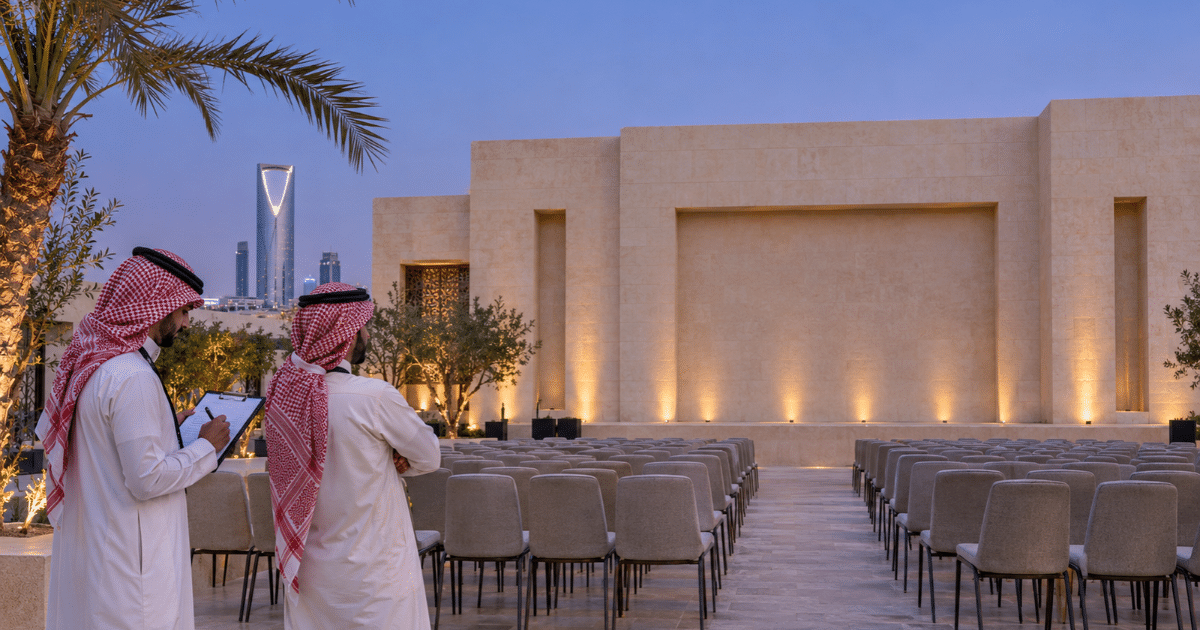
A projection mapping site survey in Saudi Arabia should establish whether the proposed surface, viewing positions and lighting can support the show before you book equipment or commission final content. Measure the canvas, walk the audience area, trace the proposed beam paths and record the light falling on the surface during the intended show window. Give each unresolved issue an owner and a rehearsal check.
For a Saudi event team, the same method applies to a Riyadh launch on an outdoor façade, a heritage venue in Diriyah or a brand activation inside a Jeddah exhibition hall. The constraints will differ. An outdoor venue may have architectural lighting and a changing twilight window. An indoor venue may have neighbouring LED screens and lighting cues controlled by several teams.
What to Record in a Projection Mapping Site Survey
Start with the event date, cue times, audience layout and intended image boundary. Identify whether the content must be legible from reserved seats, a standing area, an accessible viewing position or a broadcast camera. Confirm who can authorise changes to lighting, staging and equipment locations.
Work from the latest venue plan and mark what you verified in person. Add photo references to each candidate projector position, surface zone and viewing point. Record the time and lighting state for each photograph. Keep the plan revision with the survey so the production team can check whether a later layout invalidates an observation.
What to Bring to a Projection Mapping Site Survey
Bring the current floor plan and elevation, a suitable distance measuring tool, a lux meter, a camera and a way to mark observations on the plan. Ask the venue for access to the planned audience areas and equipment positions. Bring a short sample of the proposed content if the venue and AV team can arrange a test. Confirm permission to survey sensitive or heritage areas.
Assess the Projection Surface
A projection surface assessment starts with the actual image boundary. Record width and height, corners, recesses, columns, window openings and any parts you intend to leave dark. Give the content team annotated photos and dimensions tied to identifiable points on the elevation. Record the units and reference points so a measurement can be repeated.
Check how the finish varies across the image area. Pale stone, darker panels and glass can respond differently to the same projected image. A deep recess may be visible from the audience but shaded from the projector. Mark where text, logos or fine detail need to move, and verify the intended colour and contrast with a representative test. For a heritage façade, coordinate temporary equipment and access with the venue before assuming the team can use a particular location.
Check Audience Sightlines and Beam Paths
Walk the audience sightlines at the planned seated or standing height. Check central, side and rear positions, plus accessible seating and any priority camera locations. Note where the image is hidden, compressed by the viewing angle or hard to read. Record which positions are essential to the brief.
Then check the beam path from each candidate lens position to the image area. Include stage scenery, truss, temporary signage, camera platforms and queues in the review. For example, guests may see the full façade from their seats while a camera platform sits across the beam and casts a shadow. Mark the conflict on the plan and assign a decision to the stage or AV lead before confirming either location.
Measure Ambient Light During the Show Window
For ambient light measurement, take readings at representative points on the proposed surface with the projector off. Ask the AV specialist to use a consistent meter orientation and record the point, reading in lux, time and lighting state. Include bright areas near façade fixtures, as well as darker sections, so a single reading does not conceal a local problem.
Return at the intended show time if the first visit happens in daylight. For a Riyadh outdoor launch, record the earliest scheduled cue and the lighting conditions expected at that cue. For a Saudi exhibition hall, ask about house lights, neighbouring screens and any lighting that changes when visitors enter. Confirm which fixtures the venue can adjust and which will remain on for circulation or safety. Ask the venue to confirm the agreed cue settings.
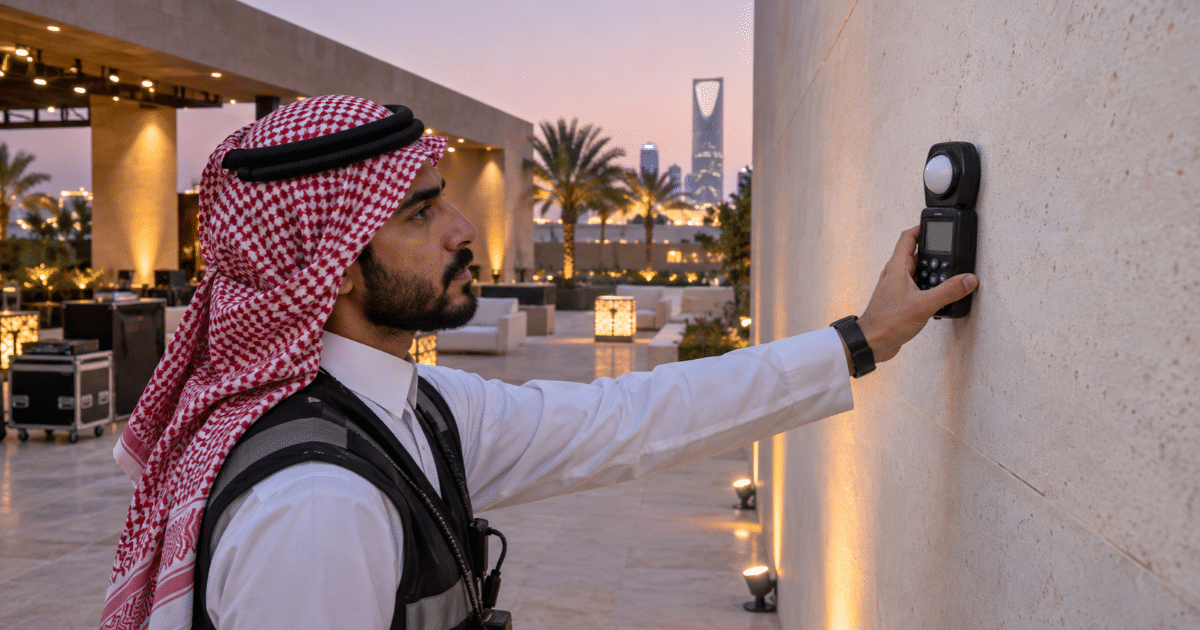
A projection mapping site survey should link readings to a decision. If a floodlight washes out the area reserved for a logo, ask whether the venue can adjust that fixture or whether the logo should move. Retest under the agreed conditions. Avoid choosing a projector from a lux reading alone because image size, surface finish and content also affect the result.
Verify Projector Positions and Throw Distance
Record projector throws distance from the proposed lens position to the relevant surface reference. For an angled or irregular canvas, measure the geometry needed by the AV designer to model the setup. Give the designer the intended image width and the exact projector and lens options so they can check coverage, lens shift and alignment against the manufacturer’s data.
Review projector placement with the venue and production team. Check access, power and signal routes, clearance for ventilation and weather protection where applicable. Confirm how the responsible specialist will assess support or mounting. If two projectors will share one image, include the planned overlap in the layout and verify the join from priority viewing positions.
Turn Survey Findings Into an On-Site Test
Use this editable register to carry decisions from the survey to rehearsal. The rows are illustrative. Add the venue reference, date and status for each check.
| Survey Item | What to Record | Action Owner and Rehearsal Check |
|---|---|---|
| Canvas and finish | Dimensions, photo reference, glazing and recesses | Content lead checks artwork against the marked image boundary. |
| Audience view | Priority seats and any obstructed positions | Venue lead confirms the seating layout and rechecks affected views. |
| Beam clearance | Lens position, stage furniture and camera platforms | AV lead checks the beam with the final stage setup in place. |
| Show lighting | Surface readings, cue time and fixture states | Lighting lead confirms cue settings and repeats the relevant readings. |
| Lens and coverage | Projector and lens models, distances and image width | AV lead verifies coverage and alignment on the actual surface. |
| Release decision | Outstanding issue, agreed change and evidence | Producer records which issues must close before the show can proceed. |
Run a projection mapping test using representative dark scenes, bright areas, fine detail and any logos that must read clearly. Compare the result from the agreed viewing points during the intended lighting cue. If the venue or staging changes after the rehearsal, recheck the affected items and record the outcome.
Discuss Your Projection Mapping Site
Share the venue location, site photos, surface dimensions, show timing and audience layout with Silver Foundation. Include any unresolved lighting or staging constraints so the team can discuss survey access and test scope.
Explore Silver Foundation’s Projection Mapping Services
If you are still choosing how to use mapping at your event in Saudi Arabia, read the related guide.
Frequently Asked Questions
Can You Do a Projection Mapping Site Survey During the Day?
Yes. Use daylight to record geometry, surface finish, access and obstructions. Verify lighting and image legibility during the intended show window or under a lighting cue that reproduces the expected conditions.
What Surfaces Work Best for Projection Mapping?
A consistent matte finish is often easier to work with than a surface with mixed colours, glossy panels or glazing. The right surface depends on the effect you want and where the audience stands. Test a representative section before finalising detailed content.
How Do You Check for Shadows Before an Event?
Trace the beam from the proposed lens position to the full image area. Add the final locations of staging, AV equipment and likely pedestrian routes. Repeat the check during rehearsal with the temporary structures in place.
How Do You Measure Ambient Light for Projection Mapping?
Use a lux meter at several points on the surface with the projector off. Record the readings with the time and lighting state. Include both the brightest areas and representative darker areas, then repeat the check when the show lighting is set.
Can You Calculate Projector Throw Distance From a Venue Plan?
You can estimate it from a dimensioned plan. Confirm actual distances, elevations and offsets on site, then check the proposed lens against the manufacturer’s data for the required image size and geometry.
What Should You Test Before a Projection Mapping Show?
Check image coverage, alignment, readability, shadows and contrast from priority viewing positions. Use representative show content and the intended lighting cues. If the design uses multiple projectors, check overlap and visible joins as well.


