
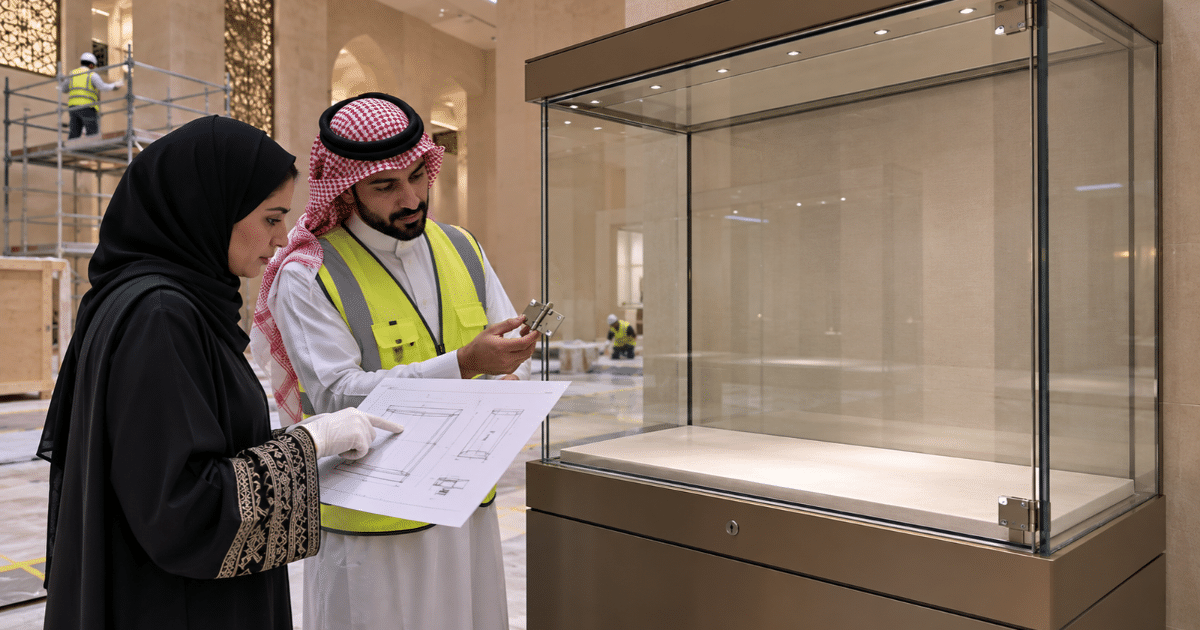
Museum display case installation starts with three decisions. The conservator defines what the objects need, the contractor shows how the installed case meets those requirements, and the museum names the person authorised to release it for object placement. Agree all three before fabrication so the project team knows what evidence to collect and who can resolve a discrepancy.
Keep a case schedule with one row per case. Link each case ID to its proposed objects or object group, drawing revision, agreed criteria and sign-off record. Use the same ID on the drawings, test reports and defect list. A test report without a case ID is difficult to match to the enclosure when several similar cases arrive together.
Assign Responsibilities for Museum Display Case Installation
Name a lead for every decision in the responsibility matrix. A case supplier may prepare shop drawings and install the case under the main contractor, or the museum may appoint the supplier directly. The matrix should reflect the actual contracts and give each specialist a clear route for raising an issue. Agree who witnesses the tests and who can approve a departure from the brief.
| Decision or Deliverable | Prepares or Performs | Reviews or Accepts |
|---|---|---|
| Object needs and loan conditions | Conservator with registrar or lender | Museum collections lead confirms the applicable requirements |
| Case drawings and building interfaces | Case supplier and contractor | Design team reviews coordination. Conservator reviews collection-related details. |
| Mount design and contact materials | Mount maker with conservator input | Conservator and lender where applicable |
| Installed case checks and test evidence | Contractor and relevant specialists | Named museum and conservation representatives review against the agreed criteria |
| Release for object placement | Museum project lead assembles the evidence | Named museum approver records the release with conservation input |
Ask who will make the final decision when responsibilities cross. For example, facilities staff may accept access to the lighting driver while the conservator reviews whether opening its service compartment disturbs the object chamber. Both decisions belong in the same case record.
Agree Case Requirements Before Fabrication
The museum display case specifications should identify the objects, their handling and support needs, and the performance the case is expected to provide. Record relevant materials, seals, finishes, lighting controls, locks and access arrangements. Specify the agreed verification method alongside each requirement. That lets the supplier price testing and gives the reviewer a basis for acceptance.
Control Material and Mount Changes
Set a route for conservator approval of materials in or communicating with the object chamber. Request the product identity and relevant technical information for finishes, adhesives, liners and sealants. Have the conservator decide what evidence or testing is needed for the objects involved. If the proposed finish changes, check the substitution before it is incorporated and update the approved material schedule.
Agree the object contact points and the removal sequence with the mount maker. For example, if a proposed mount requires the object to tilt during removal, ask the collections team to check both handling and door clearance before the mount is made. Use a surrogate or template for fit checks where the conservator considers that appropriate.
Coordinate the Case With the Gallery
Overlay the case drawing on the latest gallery layout. Check the route from unloading to final position, the available turning space, the finished floor levels, the opening direction and space for staff to work. Ask the responsible design professional to verify floor loads and fixing details. Confirm which team supplies each power, data and security connection and how staff will reach serviceable parts after installation.
Gallery HVAC coordination starts with the conditions around the case. Identify nearby supply outlets, doors and other sources of local change. If the case has passive buffering or active climate control, agree who provides it, who reads the sensors and who responds to an excursion. Keep room and in-case readings identifiable so staff can tell which environment a measurement represents.
A museum display case installation can appear complete while these interfaces remain unresolved. If a power cable entry changes after the case was tested, record the change and agree whether it affects the test result, maintenance access or the accepted enclosure details. The case supplier and museum team can then decide what to verify again.
Read Silver Foundation’s Museum Fit-Out in Saudi Arabia Requirements Brief.
Inspect and Test the Installed Case
Set inspection points for delivery, installation and performance. On delivery, identify each unit and record visible damage or missing parts before moving it into the gallery. After installation, check the case in its final position and with the components that affect its operation in place.
What to Verify During Museum Display Case Installation
| Acceptance Check | Evidence to Record |
|---|---|
| Case identity and location | Case ID, gallery location and approved drawing revision |
| Physical condition and function | Condition photos and checks of doors, locks, seals and service access |
| Object chamber readiness | Accepted materials and mount references, clean interior and any required curing or clearance records |
| Services and monitoring | Relevant lighting, security and logger checks with the responsible reviewer |
| Specified performance | Report matched to the case ID, test configuration, agreed criteria and any retest |
| Open items and release | Defect owner, due date, closure evidence and named release decision |
If the brief calls for display case airtightness testing, agree the method, test configuration and acceptance criterion with the relevant specialists. The Canadian Conservation Institute’s Technical Bulletin 38 describes methods for measuring air exchange and discusses how to specify it. The applicable target depends on the case and collection requirements. Keep the record of what was tested, particularly if doors, seals or service penetrations are adjusted later.
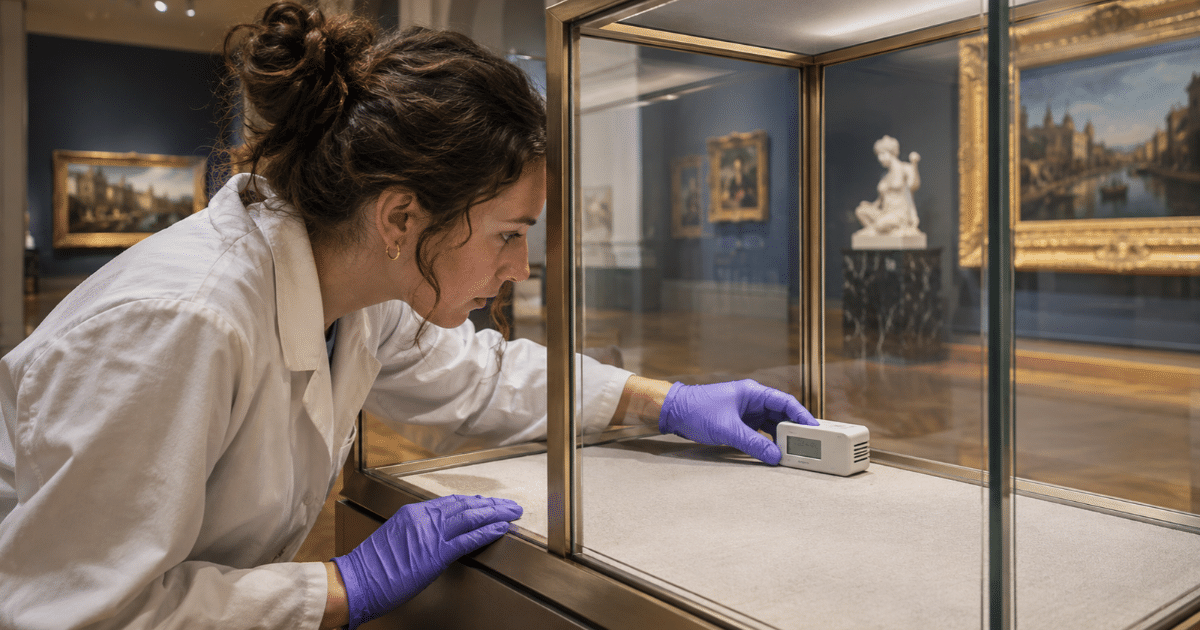
For cases with environmental monitoring, agree the location of the logger and the review period with the conservator. Record the instrument ID and identify whether readings were taken in the gallery or inside the enclosure. If an empty case was monitored under conditions different from normal gallery operation, document that difference for the person making the release decision.
Release the Case for Object Installation
Make artifact installation a separate decision in the programme. Confirm that required checks are complete, the object chamber is clean, mounts and materials have been accepted, and staff know how to open and secure the case. Record any remaining conditions and the person who can close them. Coordinate the move with the collections team and any lender requirements.
In an illustrative example, the case lighting operates correctly but the door binds after a final adjustment. The contractor records the fault and checks alignment. If the adjustment affects the seal, the team reviews whether the specified performance test needs to be repeated. The museum records release only after the relevant checks and any required retest are accepted.
For museum case handover, retain the approved and as-built drawings, material and mount records, test reports, defect closures, operating instructions, warranties and monitoring arrangements as applicable. Assign custody of keys and access credentials through the museum’s agreed security process. Record who will respond to faults and how the case can be serviced after the gallery opens.
Discuss Your Museum Display Case Scope
Share your case schedule, gallery drawings and proposed review responsibilities with Silver Foundation. Ask which installation and coordination tasks can be included in the project scope, and identify the conservation and testing input the museum will provide.
Discuss the project with Silver Foundation’s Events & Exhibition team.
Frequently Asked Questions
Who Signs Off a Museum Display Case Before Objects Go Inside?
The museum should name the release authority in the project brief. The contractor submits evidence, and the conservator reviews collection-related requirements. A lender or registrar may also have a defined approval role. Record the decision against the individual case ID and its current revision.
When Does a Museum Display Case Need Airtightness Testing?
Test when the specification, loan conditions or conservation plan requires measured air exchange performance. Agree the target and method before ordering the case. Ask the responsible specialist whether later changes to seals or penetrations affect the validity of the test.
Can Gallery HVAC Control Humidity Inside a Display Case?
Gallery HVAC conditions influence the environment around the case. Humidity inside depends on air exchange, the enclosure design and any buffering or active controls. If the collection has an in-case requirement, agree how to measure and verify it inside the case.
Where Should a Humidity Logger Go in a Museum Display Case?
Ask the conservator to choose a location that represents the environment the objects experience. Consider nearby heat sources, airflow and access for retrieval. Record the position with the logger ID and label any separate gallery sensor in the monitoring records.
Who Approves a Change to an Artifact Mount?
Refer changes to the conservator and mount maker. Include the registrar or lender where the loan conditions require it. Provide a revised drawing or photograph showing the proposed contact points, clearances and removal method so the reviewer can assess the change before use.
What Documents Should a Display Case Contractor Hand Over?
Provide the case schedule, approved and as-built drawings, material and mount references, relevant test reports, defect closure records and operating instructions. Include maintenance and warranty details where applicable. Identify the party responsible for monitoring and servicing each case after handover.


