
MEP coordination needs a record of decisions, not just a list of clashes. For each issue, identify the location, affected trades, drawing or model version, responsible owner, decision deadline, approval, installation impact and closure evidence. Keep those fields connected through a unique issue ID.
A detected clash shows a potential conflict. It does not establish that a proposed change is technically acceptable, approved for installation or verified on site. Project managers and MEP consultants should track those decisions separately so a revised model is not mistaken for a complete resolution.
This guide explains how to use a coordination issue register on Saudi building projects, including work in Riyadh. The examples are hypothetical. Adapt the workflow to the contract, approved design, project procedures and applicable authority requirements; it does not guarantee cost savings.
Incomplete Information And Communication Gaps
Mechanical, electrical and plumbing—MEP—systems share space with architecture and structure. If teams work from different revisions or incomplete layouts, an installation can conflict with another trade’s work. Correcting that conflict may require redesign, additional material or changes to the installation sequence. Record the specific consequence rather than assuming every issue has the same financial impact.
A meeting can reveal the problem without resolving it. If nobody owns the next action, a question can remain open while procurement or site work continues. The register should identify the decision required and the person who will obtain it, with separate reviewers where necessary.
Space Constraints And Late Changes
Coordination should consider installation space, supports, insulation, maintenance access and interfaces with the building fabric. A route that fits geometrically may still need technical review for performance or access. Changes to room layouts, equipment or ceiling levels can reopen previously accepted arrangements.
The effect varies with the project and how much work has already been designed, ordered or installed. Keep any cost estimate and programme effect in the project’s change-control records. Clash counts alone do not demonstrate money saved or establish responsibility for additional cost.
Separate Clash Detection From Approved Resolution
Detected And Under Review
A detected issue may come from a model check, drawing review or site observation. Record the evidence and versions first. Confirm that the conflict is genuine: duplicate objects, outdated information or unsuitable checking rules can create misleading results. A model check only addresses the information and checks included in that review.
Proposed And Approved
The issue owner coordinates a proposed response with affected disciplines. Review the technical consequences before approval: performance, access, structure, interfaces and any changed approval requirements. Name the person authorised to accept the response under the project’s procedures. Meeting agreement or a model edit does not automatically provide that authority.

Released And Verified Closed
After approval, identify the document revision and scope released to the site team. Design closure can mean the approved information resolves the coordination question. Installation closure requires the verification evidence specified for the actual work. Use separate status fields where both are needed, and reopen the issue if later information changes the basis of acceptance.

Build A Coordination Issue Register
Use one ID throughout the register, drawings, meeting actions and linked submissions. Add a concise issue description, status and date raised. The required fields below keep the technical question connected to its decision and site consequence. A spreadsheet or project platform can hold the record; the quality of the evidence matters more than the software name.
| Field | What To Record |
|---|---|
| Location | Building, level, room/grid and affected system or item. |
| Affected trades | All disciplines involved, including architecture or structure where relevant. |
| Drawing/model version | Source file, revision, issue date and relevant view or detail; list each affected source. |
| Issue owner | Named person responsible for coordinating the next action; identify reviewers separately. |
| Decision deadline | Date needed and the installation/procurement dependency behind it. |
| Approval | Status, authorised approver, decision date, reference and any conditions. |
| Installation impact | Affected work, hold boundary, orders, sequencing and change-control reference. |
| Closure evidence | Accepted revised information plus applicable site inspection/test evidence and verifier. |
Define the status meanings with the team. Avoid one label such as closed that could mean screened out, design approved or installed and inspected. Where an item is not applicable, record the reason. Use links to controlled documents so reviewers can find the evidence without searching through email attachments.
Hypothetical Coordination Register Example
The following three issues are invented examples for a commercial building. IDs, locations, revisions, roles and deadlines are illustrative. The tables form one register and connect through the same issue IDs; none describes Silver Foundation work or an approved engineering solution.
| ID And Issue | Location And Trades | Drawing/Model Version | Issue Owner | Decision Deadline |
|---|---|---|---|---|
| C01 Duct/tray conflict | Level 2 corridor, grid B3; mechanical/electrical | MEP model R03; duct D-210 R02; tray E-220 R01 | Named MEP coordinator | Agreed date before fabrication release |
| C02 Access obstructed | Plant room PR-01; mechanical/architectural | Plant layout M-310 R02; partition A-105 R03 | Named mechanical lead | Agreed date before partition release |
| C03 Penetration unresolved | Service shaft S-02; plumbing/structural | Pipe P-120 R04; structure S-115 R02 | Named plumbing lead | Agreed date before affected work starts |
| ID | Approval | Installation Impact | Closure Evidence And Status |
|---|---|---|---|
| C01 | Proposal under review; no approval issued | Hold affected duct/tray fabrication pending decision | Open. Await approved coordinated revisions and release record; verify installed route under project plan. |
| C02 | Hypothetical design acceptance recorded in DEC-02; site verification pending | Issue revised partition detail; confirm site receipt | Design resolved, installation open. Retain approval, revised detail and required access inspection before closure. |
| C03 | No structural acceptance; information requested | Hold affected penetration work; escalate dependency | Open. Await reviewed detail and required release; retain specified installation inspection evidence. |
C01 demonstrates that identifying a clash does not select the solution. C02 demonstrates that design acceptance can precede site closure. C03 demonstrates why the owner must involve an affected discipline rather than assume a service change can proceed. The competent project team determines the appropriate engineering response.
Run Meetings Around Decisions And Deadlines
Assign One Action Owner And The Right Reviewers
Before each coordination meeting, circulate the open issues, relevant views and the decision needed. Ask the owner to identify affected disciplines and outstanding information. Record the proposed response, reviewers, next action and deadline in the register. Keep meeting notes linked to the issue ID, but retain formal approval references separately.
The issue owner follows the action through; that role does not transfer design authority or contractual responsibility. For a shared issue, identify each discipline’s contribution. If a decision changes scope, cost or time, route it through the agreed change procedure as well as the technical review.
Escalate Before Affected Work Proceeds
Set decision dates from actual dependencies, such as fabrication, ordering or ceiling closure. Include time for review and correction. If the date is missed, identify the affected work and escalate to the designated decision maker. Record any hold or limited release with its boundary and conditions; do not treat silence as approval.
Review priority by potential consequence and proximity to installation. A visually small conflict may affect critical access or a system interface. Avoid judging urgency only by clash size or total numbers. The project team should assess any safety or performance implications.
Control Drawing And Model Revisions
At each review, record exactly which files were checked and their revisions. Where discipline models are combined for coordination, confirm their alignment and issue status. Keep a drawing/model register that distinguishes working information, information for review and the version authorised for the stated installation scope.
When an issue is approved, update every affected drawing, schedule or model view required by the project. Identify downstream changes to fabrication, procurement and installation. Notify affected parties and record receipt through the document-control procedure. Retain superseded information as history while preventing its unintended use on site.
A clash-free model view does not establish design compliance, system performance or buildability. Checks may omit maintenance zones, insulation, supports or information outside the model scope. Review the approved specifications and relevant calculations alongside geometry, using competent discipline reviewers.
Verify Closure Before Releasing Affected Work
Agree the closure evidence when the response is accepted. Design evidence may include an approval reference, revised coordinated drawings and a repeat check against the affected interfaces. Installation evidence may include the project’s inspection records, relevant measurements, photographs and specified tests. Choose the evidence from the approved project requirements; no single record suits every issue.
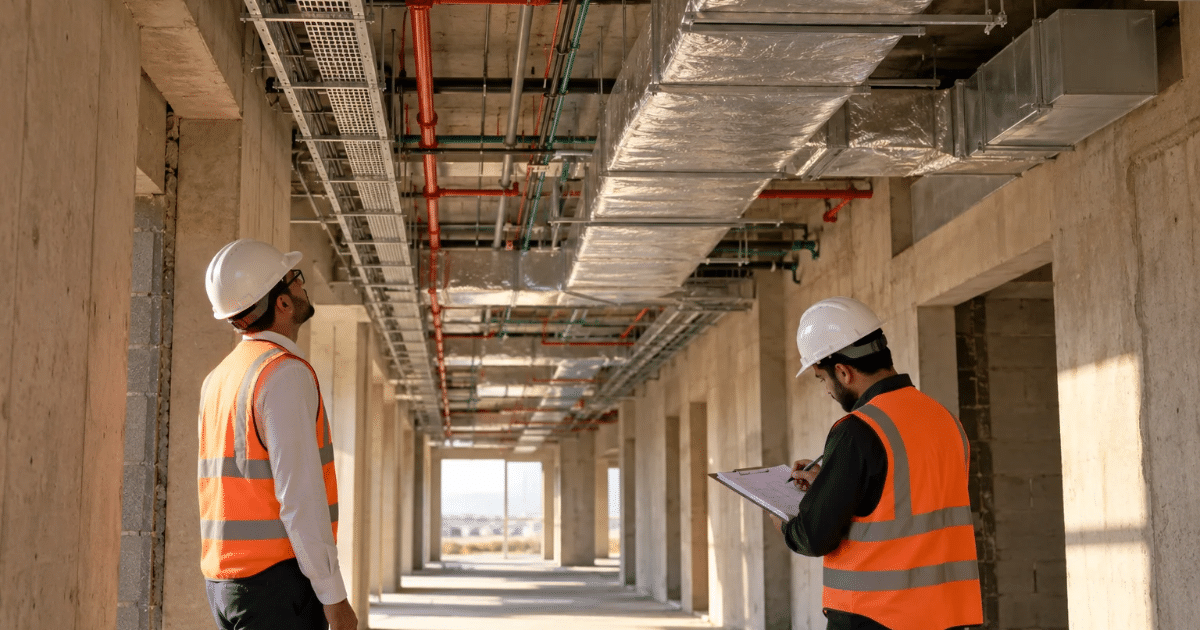
Confirm that the evidence covers the stated location and revision. Record who verified closure and when. Where the installation differs from the approved response, reopen the issue or start a linked record rather than closing it with an unrelated photograph. Update the installed record where required and preserve any unresolved limitation.
Do not close an issue solely because it has disappeared from a later clash report. The objects may have been omitted, moved or filtered. Check the reason and retain the decision trail. Likewise, approval to install does not remove later inspection or testing obligations specified for the work.
Apply The Register To Your Saudi Project
Confirm the applicable Saudi code edition, discipline requirements and authority procedures with the appointed engineering team. The ministry publishes a reference page for the implementing regulations of the Saudi Building Code Law. Use the current applicable requirements in the technical review; this register does not itself demonstrate code compliance.
Consult the ministry’s Saudi Building Code implementing-regulations reference.
Assess whether a proposed change affects authority-approved information or an existing permit. The ministry’s building-component modification service involves an engineering office preparing the required plans. Its existence does not mean every routing adjustment needs that service. The appointed team must confirm the applicable process and retain any required authority decision separately.
Review official guidance on modifying building components.
Before agreeing a coordination scope, confirm model coverage, drawing deliverables, review authority, issue-management responsibilities and site-verification duties. Specialist environments or unusual systems may need additional expertise. This guide does not specify healthcare, industrial-process or fire-system design requirements.
Silver Foundation lists mechanical, electrical and plumbing design services. Discuss the coordination deliverables and responsibilities required for your project before appointing the team.
Explore Silver Foundation MEP design services.
Contact Silver Foundation to discuss your MEP project scope.
Frequently Asked Questions
Does Every Detected Clash Require A Design Change?
No. First confirm that the issue is genuine and relates to the current information. Duplicate objects, outdated revisions or checking settings may create misleading results. If the conflict is valid, the affected disciplines assess the response. Record any decision to dismiss or accept an issue, with its reason and authorised review.
Who Owns An Issue Affecting Several Trades?
Assign one person to coordinate the action and obtain the necessary responses. Identify the affected discipline reviewers separately, including architectural or structural reviewers where relevant. The action owner does not automatically become the design approver. Confirm responsibility and authority through the project’s appointments, contract and agreed coordination procedures.
Can An Approved Resolution Remain Open?
Yes, where installation or its verification is still outstanding. Record design approval and site closure separately. The register should show the approved revision, remaining work and evidence needed to close the installation issue. Do not infer that approval alone confirms what was built or fulfils specified inspection and testing requirements.
What Happens When Installation Uses An Older Revision?
Identify the affected location and compare the work with the currently authorised information. Record the discrepancy and notify the responsible project team. The authorised reviewers determine the response, including any inspection, correction or further approval required. Update the issue record and document trail before describing the discrepancy as resolved.
Can MEP Coordination Guarantee Lower Project Costs?
No. Coordination can help teams identify and address issues, but its financial effect depends on the project, information quality, timing and response. Some changes still require additional work. Record actual impacts through the project’s cost and change procedures. A lower clash count alone is not evidence of a saving.