
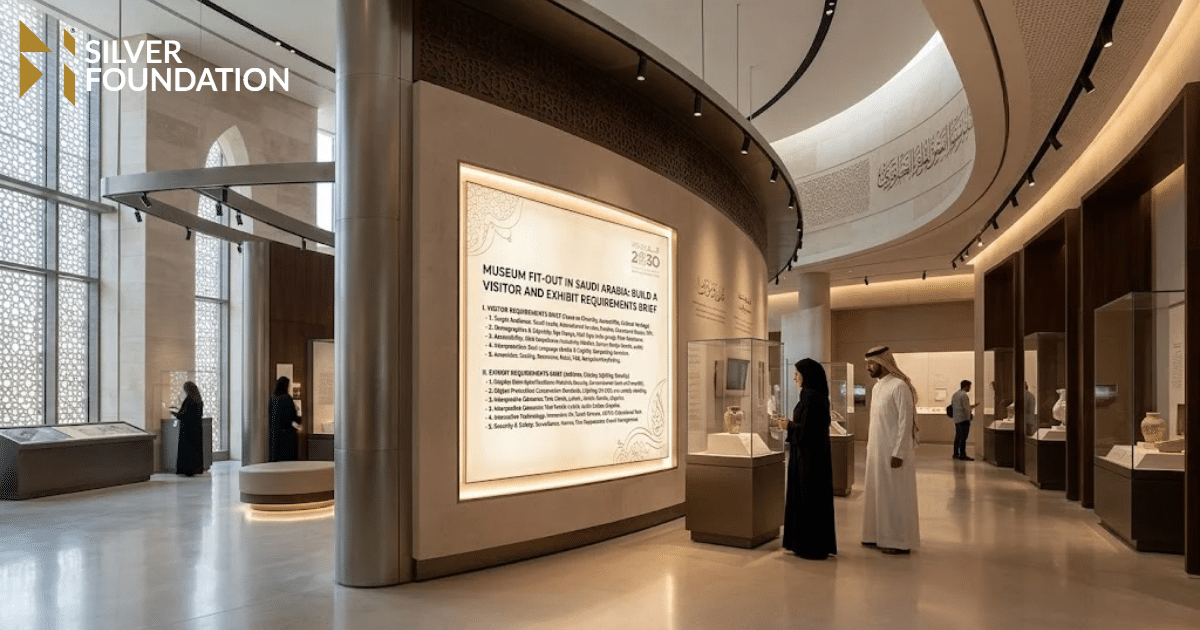
A museum fit-out proposal should explain how visitors will experience the collection and how the completed space will support its care. Attractive gallery views alone cannot answer questions about sensitive objects, accessible interpretation, content updates or maintenance. Museum operators, curators and project owners need a shared requirements brief before comparing suppliers or releasing detailed design.
For a Saudi project, including a museum in Riyadh, that brief should connect the exhibition story with building conditions, operational responsibilities and specialist approval. This guide retains the broad scope of museum fit-out while adding a practical decision tool: a requirements matrix that records what is needed, who approves it and what evidence demonstrates delivery.
Define The Exhibition Story
Begin with the museum’s purpose and the questions visitors should explore. An art gallery, local history collection, science exhibition and children’s discovery space will have different interpretation and operational needs. Identify original objects, replicas, loaned items, digital media and hands-on exhibits separately. Their installation requirements may differ even within one room.
Ask the curator to identify the essential objects and the narrative sequence before the designer fixes display positions. Record which exhibits are permanent, which rotate and which depend on loans still awaiting agreement. Include interpretation languages, expected label formats and the approval process for translations. A beautiful display that cannot accommodate the final object or approved narrative may require redesign.
Identify Visitors And Operating Patterns
Describe anticipated school groups, families, individual visitors and organised tours. Establish how staff will supervise interaction, manage queues and support visitors needing assistance. Record operating hours, cleaning arrangements, temporary closures and the frequency of exhibition changes. These inputs help designers assess circulation and service access without assuming every museum operates alike.
Silver Foundation’s events and exhibitions services describe exhibition delivery and related event support. For a museum enquiry, ask the company to identify its proposed fit-out scope, specialist partners and exclusions. Event delivery experience should not be treated as evidence of conservation expertise or collection-care capability.
Translate The Visitor Journey Into Design Requirements
Arrival Orientation And Circulation
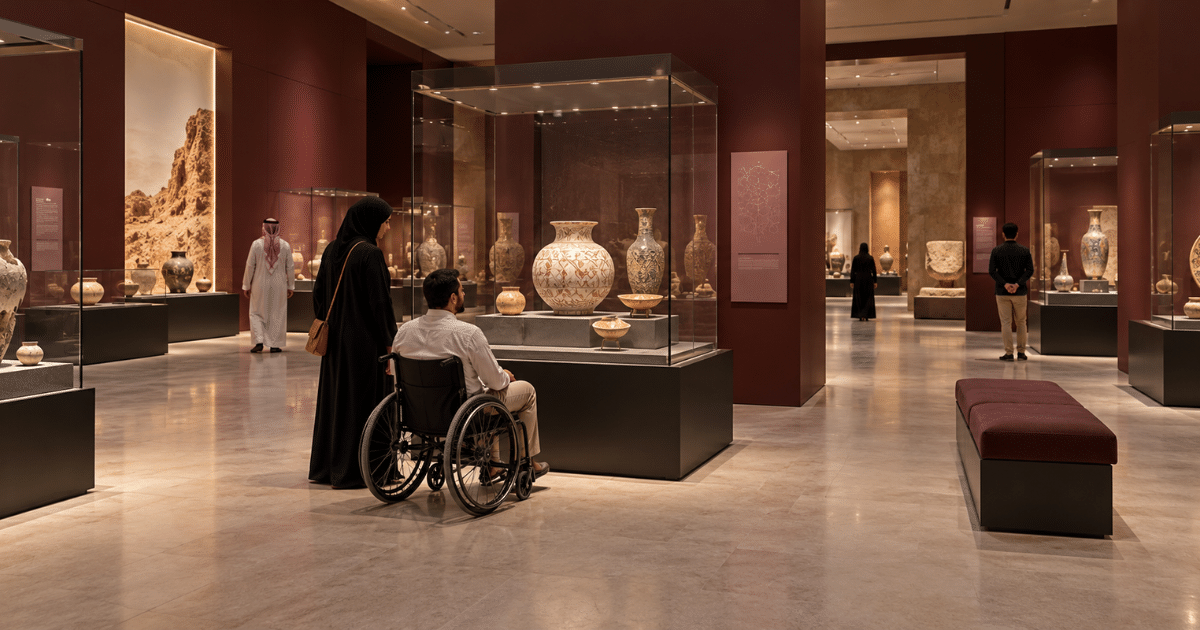
Map the journey from arrival through orientation, galleries, rest points and departure. Include ticketing or reception where applicable, group assembly, toilets and the route to public amenities. Distinguish public circulation from object movement, deliveries and maintenance. Check where these routes meet and how operations will manage the interface.
Use annotated plans to test a busy visit, a guided group and an exhibition change. A queue beside an interactive screen may obscure a display or obstruct another visitor’s route. A delivery path may require doors or handling space that the public plan does not show. Resolve these issues with the operator before layouts become procurement documents.
Accessible Interpretation And Interaction
Accessibility belongs in the brief from the start. Request review of routes, viewing positions, controls, seating, signage and interpretation by appropriately qualified designers. Include visitors with mobility, visual, hearing and cognitive access needs. Consider captions, readable content, alternatives to audio-only interpretation and options for people who cannot use a touchscreen.
The Authority for the Care of People with Disabilities’ Purple Saturday accessibility and inclusion initiative provides public awareness context on equal access and accessible digital communication. It does not replace project-specific building or exhibit design criteria.
Set acceptance checks with the relevant consultant and operator. Test representative labels and interactions in their intended position, including glare, reach and usability. Record the results and any agreed changes. A feature described as accessible in a supplier brochure still needs assessment within the proposed gallery layout and visitor experience.
Use the following matrix as a starting template. It is a hypothetical planning tool, not an approved museum specification. Replace role names with actual appointed reviewers. Give each requirement an identifier, location, revision and decision date in the project register. Supporting documents should use the same identifiers so decisions remain traceable.
| Requirement Area | Input And Design Implication | Approval Owner | Evidence Before Acceptance |
|---|---|---|---|
| Visitor journey | Audience, story sequence, queues and group routes inform layout and orientation. | Operator and curator review; designer coordinates. | Approved journey plan, layout revision and recorded walkthrough findings. |
| Accessibility | Viewing, movement, interaction and interpretation needs inform positions and interfaces. | Accessibility consultants and operators review the proposed criteria. | Reviewed drawings, representative mock-up and usability findings with actions closed. |
| Exhibit sensitivity | Object materials, loan conditions and display duration inform cases, lighting and environment. | Curators or conservators set limits; relevant designers implement them. | Approved object schedule, specialist criteria and agreed verification records. |
| AV and content | Media formats, languages, rights and updates inform equipment, software and network scope. | Content owner approves narrative; AV specialist reviews delivery requirements. | Approved content versions, rights record, functional tests and access credentials transfer. |
| Maintenance access | Cleaning, servicing and replacement routes inform panels, clearances and operating procedures. | Facilities team and curator review; designers resolve interfaces. | Demonstrated service access, equipment records and agreed maintenance instructions. |
| Specialist sign-off | Design boundaries, interfaces and acceptance methods identify decisions needing specialist review. | Appointed discipline reviewers and owners follow the contract approval route. | Signed review records, resolved comments and a documented acceptance decision. |
Separate a recorded requirement from an approved design response. “Case lighting reviewed” is incomplete without the drawing version, reviewer, decision and any conditions. Likewise, an inspection does not close an issue if the required correction remains outstanding.
Prioritise unresolved inputs before pricing. If loan conditions or content formats remain unknown, ask bidders to identify their assumptions and allowances. Record the point at which these must be confirmed and how changes affect procurement. This makes comparisons more useful than a single total price built on different interpretations of the brief.
Keep one controlled brief throughout design and installation. When an approved requirement changes, identify affected drawings, equipment and acceptance checks. An email discussion should become a recorded decision before contractors rely on it for fabrication or installation.
Let Exhibit Sensitivity Guide Technical Decisions
Curators And Conservators Set Limits
The curator or conservator should determine object-specific light exposure, environmental conditions, material compatibility and handling restrictions. Designers then translate approved requirements into lighting, display cases, controls and building-services responses. Do not apply one temperature, humidity or illumination target to every collection.
The Ministry of Culture’s published private museum licensing requirements address topics including museum purpose, display arrangements, accessibility and environmental provision. The operator and consultant should confirm the current requirements and their applicability to the particular museum. This published checklist does not establish object-specific conservation limits or substitute for specialist design approval.
Coordinate Cases Lighting And Building Services
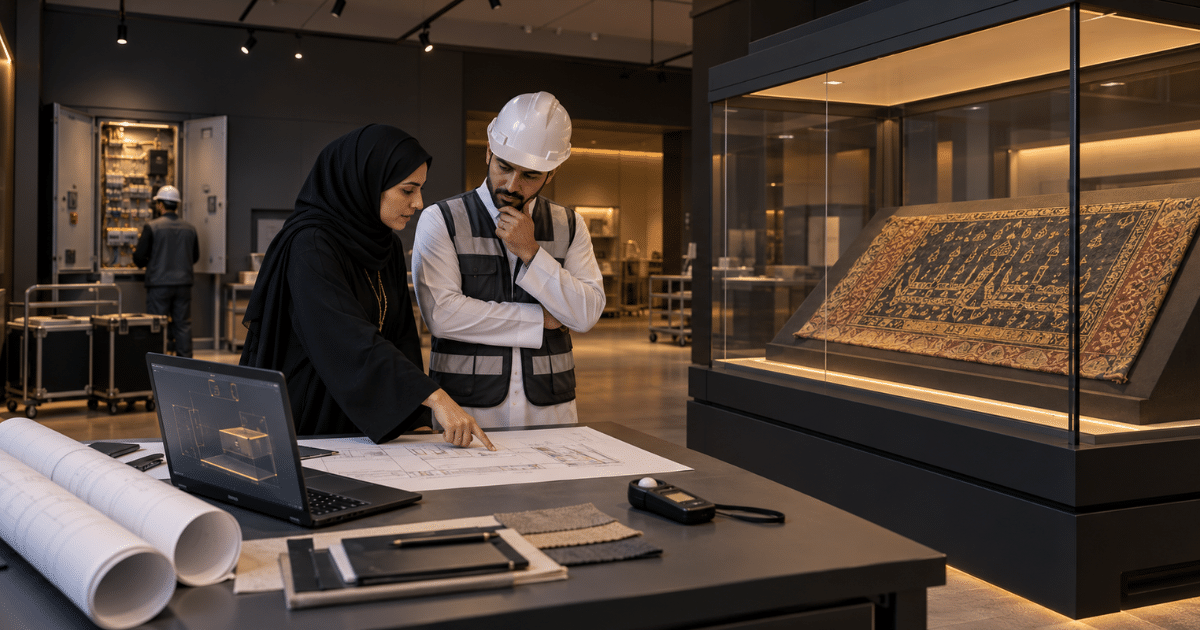
Review display cases, mounts, lighting positions and servicing arrangements together. Ask who designs each element and who checks its interface with adjacent work. Confirm how monitoring equipment, controls and maintenance access will be accommodated without disturbing exhibits.
Hypothetical example: a planned replica is replaced with a loaned original document. The curator refers the change for conservation review. The team reassesses display duration, lighting, case requirements and environmental monitoring against the lender’s conditions. Fabrication proceeds only after the revised response follows the agreed approval route.
For acceptance, specialists should define the measurements, locations, test conditions and evidence required. Retain records against the relevant object or zone. Avoid promises that a fit-out will automatically prevent deterioration: collection care also depends on operating practices, monitoring, maintenance and the suitability of the approved design.
Assign AV Content And Maintenance Responsibilities
Confirm Content Rights And Approval
List the owner of every film, image, recording, translation and interactive application. Establish who approves accuracy, who obtains permissions and who supplies final files. Specify responsibilities for software licences, renewal costs, hosting and any network dependencies. Separate hardware procurement from content production so missing media does not emerge at commissioning.
Silver Foundation’s audio visual systems services describe AV delivery. Confirm the proposed museum scope separately, including integration, programming, content migration and support. Agree the functional test script before installation, using the final approved content wherever practicable.
Plan Updates And Service Access
The facilities team needs a practical route to replace equipment, clean cases and update media. Show service panels and access paths on coordinated drawings. Confirm whether servicing requires gallery closure, object removal or specialist attendance. Consider the consequences of a failed screen or control component before selecting an arrangement that is difficult to reach.
Request editable source files where the contract provides them, administration credentials, backup arrangements and a documented update procedure. Define who can change content and how revised versions receive approval. Training should cover routine operation, recovery from common faults and escalation to the responsible support provider.
If the museum launch includes a temporary event, use the separate event and exhibition planning checklist for that activity. Keep event logistics and temporary installations coordinated with the museum’s operating restrictions and collection-care responsibilities.
Compare Proposals And Record Specialist Sign-Off
Issue the same brief, drawings and available object information to every bidder. Ask each proposal to identify included design, fabrication, installation, AV, specialist review, testing, documentation and training. Request a clear exclusions list and the responsibilities retained by the owner or separate consultants.
Compare proposals against the requirements matrix. Note each requirement’s response, evidence offered, assumption and outstanding clarification. An allowance for a display case should identify what information is needed before its specification and price become firm. A lower initial price may reflect omitted content production, specialist review or maintenance access rather than a comparable solution.
Ask for relevant project evidence showing the supplier’s actual role. Where a reference concerns an event held inside a museum, distinguish that work from permanent exhibition fit-out. Obtain permission before publishing client names, photographs or results, and verify any claimed contribution.
Set design review, procurement release and handover decisions in the programme. Duration depends on approvals, object information, fabrication, equipment availability and site conditions; avoid a universal completion period. At handover, request approved drawings, test records, operating manuals, warranties, maintenance instructions and training records within the agreed scope. Record open items and their acceptance consequences. Contractual acceptance and any authority permissions should be checked through their respective routes.
Discuss Your Museum Fit-Out Brief With Silver Foundation
Send your collection outline, visitor objectives, available plans and current approval status through Silver Foundation’s contact form. Ask for a proposal that maps responsibilities, exclusions and specialist involvement to your brief. Confirm museum-specific capabilities and the required independent reviews before appointing the delivery team.
Frequently Asked Questions
What Should A Museum Fit-Out Brief Include?
Include the exhibition purpose, object schedule, visitor journey, accessibility needs, interpretation, AV content, service access and approval responsibilities. Identify unknown inputs and their decision dates. Attach available drawings and specialist criteria. The brief should tell bidders what they must deliver and what evidence the owner expects before accepting the completed work.
Who Sets Lighting And Environmental Limits?
The appointed curator or conservator determines collection-specific requirements, including any lender conditions. Relevant designers translate those requirements into systems and display arrangements. The project team should agree on verification methods before installation. Generic equipment ratings or a supplier’s standard settings do not establish that a particular object’s conservation requirements have been met.
How Can Owners Compare Museum Fit-Out Proposals?
Give bidders the same information and request responses against each requirement. Compare scope, exclusions, specialist involvement, assumptions, maintenance provision and acceptance evidence alongside price. Resolve differences before appointment. Ask suppliers to demonstrate their actual role on relevant projects, particularly when a reference may concern temporary event work rather than permanent museum installation.
When Should Accessibility Be Reviewed?
Review accessibility during briefing and layout development, then again through representative mock-ups and completed installation checks. Include interpretation and interaction as well as physical circulation. The operator and qualified consultants should agree to applicable criteria and test methods. Record findings and close actions before acceptance instead of relying solely on descriptions in product brochures.
What Records Should The Operator Receive At Handover?
Request the documents specified in the contract: approved drawings, equipment information, agreed test results, operating and maintenance instructions, warranties and training records. Include content approvals, relevant rights documentation and system access information within scope. Identify unresolved items and their owners. Confirm separately whether applicable authority permissions and collection-specific specialist approvals have been obtained.


