

Commercial HVAC maintenance needs a schedule for each installed asset and task. Start with the equipment manufacturer’s instructions, then account for operating hours, environmental exposure, service history and applicable approved requirements. Neither twice-yearly servicing nor one-to-three-month filter replacement suits every system.
Riyadh facility teams need to know what is due, who is authorised and what confirms completion. This guide retains the familiar HVAC checklist but explains how to turn it into an equipment-specific maintenance schedule. Seasonal reviews are planning examples. Qualified personnel must confirm the actual tasks, intervals and acceptance criteria before implementation.
Identify The Asset And Its Manual
Record the asset ID, location, manufacturer, full model, serial number and equipment type. Identify the area served and whether another unit can maintain service during an outage. An air-handling unit, fan-coil unit, packaged rooftop unit and chiller should not inherit the same task list simply because all provide cooling.
Obtain the installation, operation and maintenance manual for the exact equipment configuration. Include relevant instructions for filters, motors, controls and fitted accessories. Record the document number, revision and applicable pages against each maintenance task. Ask the manufacturer or authorised supplier to resolve missing or conflicting documents.
Installation and commissioning records also matter. They explain the approved operating basis and provide reference measurements for later comparisons. Silver Foundation’s HVAC services guide for Riyadh covers the broader installation and handover context; this article concentrates on maintaining equipment after handover.
Record The Conditions That Change Maintenance Needs
Capture actual operating hours, occupancy patterns, outdoor exposure, nearby construction and previous defects. A continuously operating system serving an essential area has different scheduling constraints from an office unit used during business hours.
Dust exposure can justify reviewing inspection frequency, but it does not establish one replacement interval for all Saudi buildings. Likewise, coastal conditions should not automatically be assigned to a Riyadh property. Document the conditions observed at the site, then have the responsible engineer or service manager approve the response.
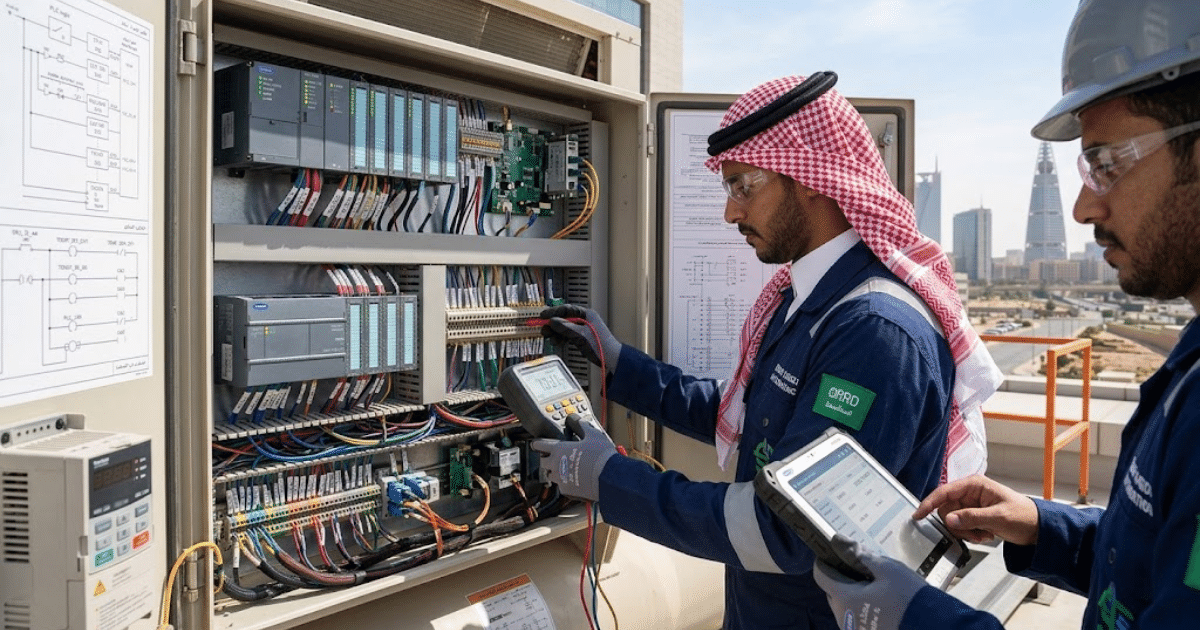
Create one row per asset and task. Separate inspection from cleaning, replacement, adjustment and testing. These activities can have different timing and authorisation requirements. A service visit is a delivery arrangement; it does not define every technical interval.
The following register is hypothetical. Asset labels and situations are illustrative, and the cells deliberately contain no universal frequencies or numerical acceptance limits. Replace each manual reference and interval basis with verified information for the installed equipment before issuing work orders.
| Asset And Model | Task | Manual Or Approved Requirement | Interval Basis | Condition Trigger | Responsible Role | Completion Evidence |
|---|---|---|---|---|---|---|
| AHU-01; confirm model | Inspect filter condition and pressure drop where provided | Exact AHU and filter instructions | Approved inspection interval; separate replacement basis | Damage or recorded condition reaches approved limit | Authorised HVAC technician | Readings, filter details and action record |
| RTU-02; confirm model | Inspect condenser coil and assess cleaning need | Unit manual and approved cleaning method | OEM schedule adjusted through documented site review | Fouling or performance concern requiring assessment | Qualified HVAC technician | Inspection findings and post-work checks |
| FCU-03; confirm model | Inspect condensate drainage | Unit manual and site access procedure | Approved task interval | Leakage or drainage concern | Authorised maintenance technician | Drain condition, work record and verification |
| CH-01; confirm model | Review alarms and operating trends | Chiller manual and approved operating limits | Approved monitoring schedule | Alarm or abnormal trend | Operator review; specialist diagnosis | Alarm history, findings and defect reference |
Enter the approved interval, next due date and schedule owner in the working system. Identify whether timing depends on calendar time, operating hours or an approved condition trigger. Where several requirements apply, document how they interact rather than choosing whichever is least demanding.
The EXPRO National Manual of Assets and Facilities Management includes maintenance management, work control and document management. Its stated scope concerns Saudi government entities. It provides useful planning context, rather than universal HVAC intervals for private commercial properties.
A schedule should also show access arrangements, permitted shutdown windows and outstanding information. Mark an unresolved requirement for review; do not present an assumed interval as an approved instruction. Keep the current schedule version visible.
Filters And Air Distribution

Record the approved filter type, size and installation orientation. Inspection should consider damage, bypass, seating and condition, together with pressure-drop readings where the system provides appropriate measurement points. The applicable instructions determine the replacement or cleaning criteria.
Reusable and disposable filters require different treatment. Do not wash a disposable filter or replace an approved product with an apparently similar alternative without checking suitability. An inspection date and a replacement date should remain separate records.
Inspect accessible air-distribution components for reported obstructions, damage and contamination within the authorised scope. Duct cleaning should follow an assessed need and approved method. A routine visit does not automatically justify cleaning every duct or making an unsupported indoor-air-quality claim.
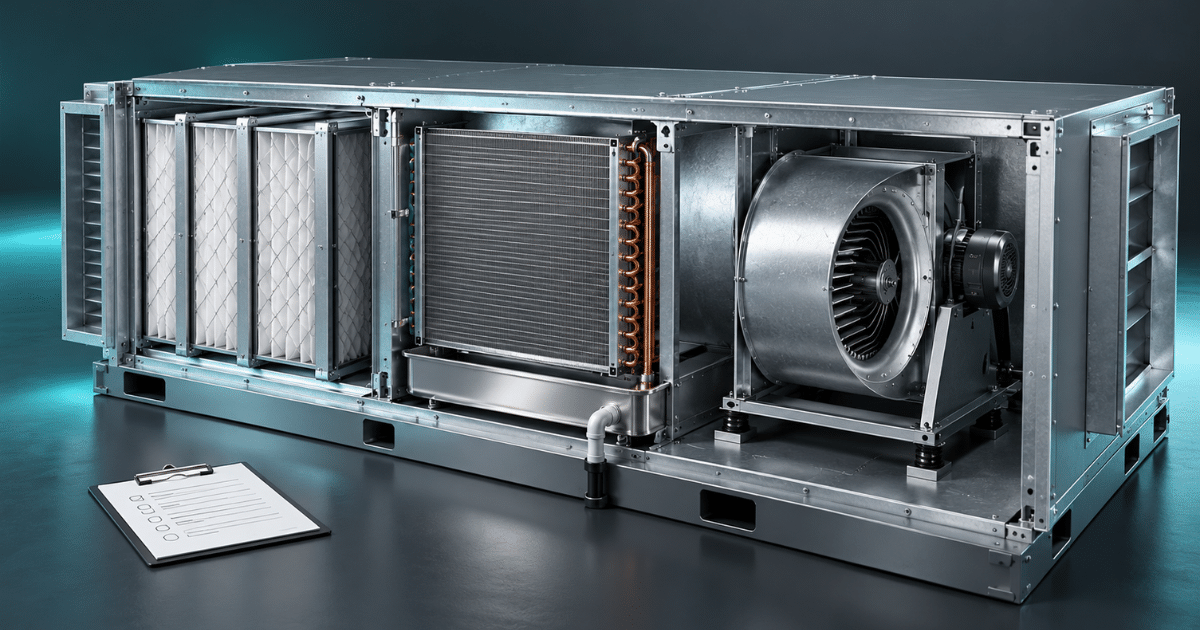
Assess coils using the equipment instructions and observed condition. Cleaning methods, chemicals and access procedures must suit the unit and its materials. Aggressive cleaning can damage components; a generic instruction to clean coils regularly is insufficient for a work order.
Inspect condensate pans and drainage arrangements for leakage, standing water and blockage within the approved task scope. Record the location and findings so recurring problems can be investigated. Repeated overflow may require diagnosis beyond another cleaning visit.
After work, document the applicable functional checks. Photographs can show visible condition, but they do not replace required drainage verification or performance measurements. Where the equipment is inaccessible, record the limitation and arrange approved access rather than marking the task complete.
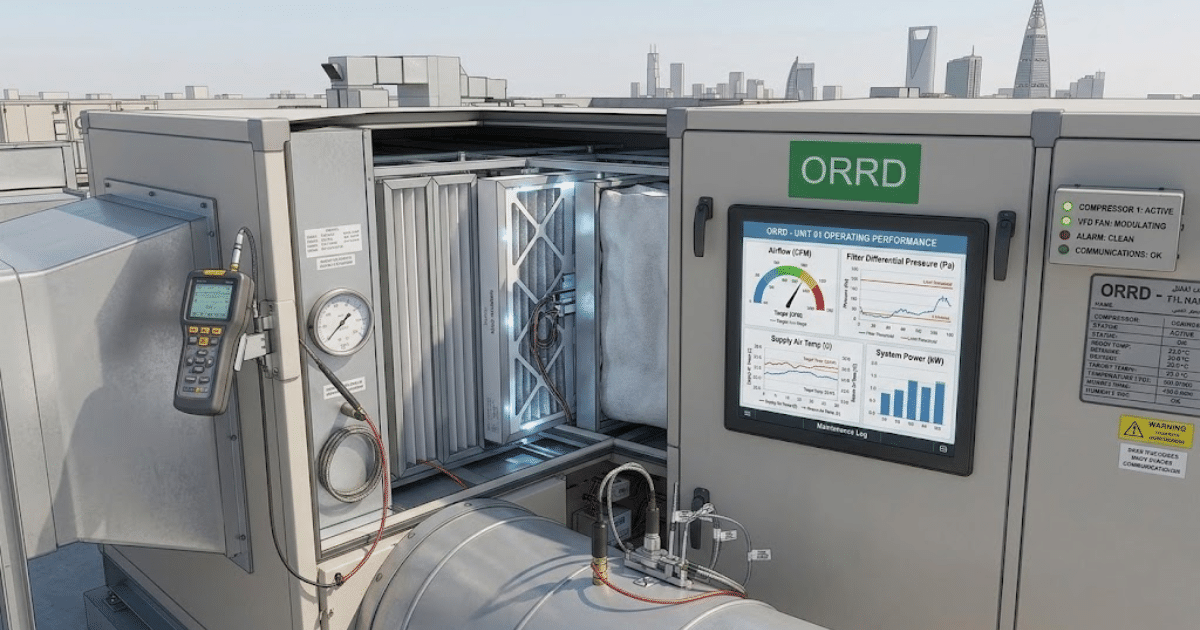
Check controls against the approved sequence and operating requirements. Record sensor readings, relevant alarms, schedules and reported comfort problems. A thermostat setting alone does not demonstrate satisfactory performance throughout the served area.
Use the engineer-approved acceptance criteria for any measurement. Identify units, measurement location, instrument and operating conditions. Temperature, airflow and pressure values depend on the installed system and design; this guide does not prescribe universal limits.
Controls adjustments should have a named approver. Retain the previous setting, reason for change and verification result. Avoid resolving a complaint by making an undocumented change that affects ventilation, operating hours or another occupied zone.
Electrical Mechanical And Refrigerant Work
Electrical testing, access to hazardous components and work on rotating equipment require suitably qualified personnel and the site’s approved safety procedures. Facility staff should report abnormal observations without opening equipment or bypassing protective devices beyond their authorisation.
Lubricate only where the manufacturer requires it, using the specified product and method. Some motors are permanently lubricated. Similarly, belt tasks apply only where belts are fitted; equipment configuration determines the checklist.
Refrigerant assessment and handling belong to qualified specialists. Do not describe topping up refrigerant as routine care for every visit. The specialist should diagnose concerns, follow the applicable equipment and handling requirements, and record the work. A refrigerant-related fault needs an identified resolution, rather than repeated unexplained additions.
Use Seasonal Reviews As Planning Examples
Before A High-Demand Period
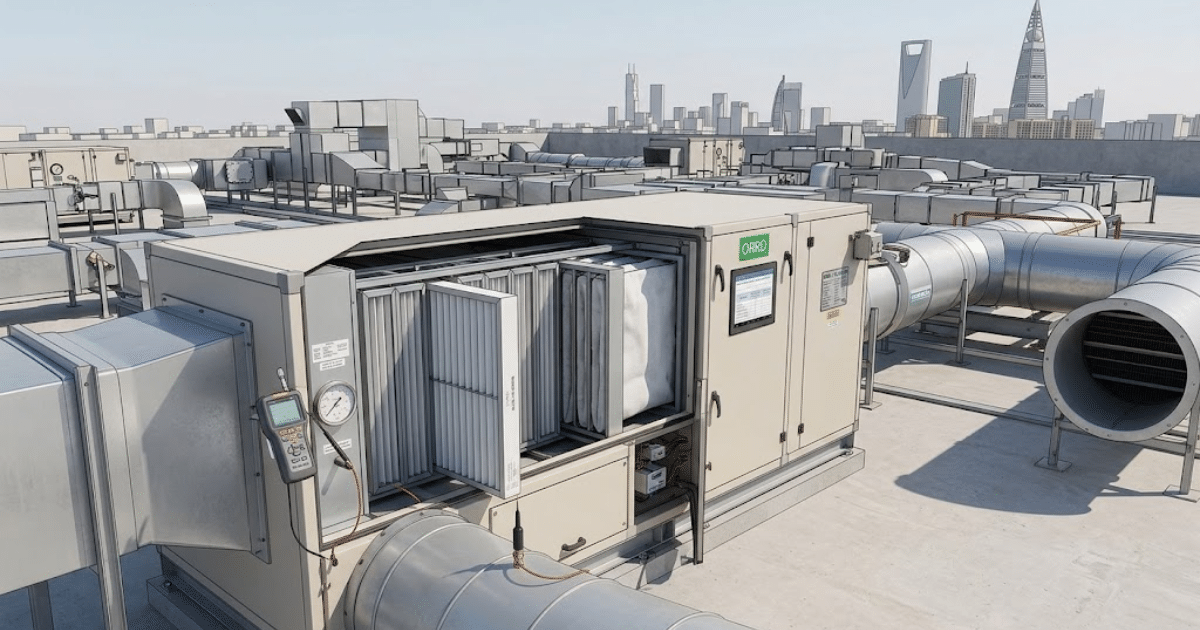
An illustrative pre-peak review could identify overdue tasks, unresolved alarms, required spares and shutdown opportunities. Check whether scheduled work can be completed before the building’s anticipated increase in cooling demand. Confirm priorities against the approved asset schedule.
This is a planning review, not a rule that every system requires the same spring service. Actual operating patterns may include continuous cooling, changing occupancy or limited shutdown opportunities.
During And After High Demand
During heavier use, review relevant trends, complaints and defects at the approved frequency. Following a dust event, construction activity or abnormal operation, the service manager can assess whether additional inspection is warranted. Event-related checks supplement the scheduled plan; they do not automatically replace it.
A lower-demand period may offer access for deferred work and a review of recurring faults. Confirm that service can be interrupted before assuming winter is an available shutdown window. Record any change to the schedule with its evidence, approver and effective date. Seasonal headings help organise work, but manuals and approved requirements govern the actual tasks.
Define Facility-Team And Technician Responsibilities
Facility teams can collect complaints, review authorised displays, maintain records and coordinate access within their training and written responsibilities. Even an apparently simple filter task may require isolation, working at height or access near moving parts. Confirm the boundary before assigning it.
Qualified technicians should perform the technical tasks for which they are competent and authorised. Identify additional specialist requirements for the installed equipment, refrigerant work, controls and electrical systems. This article does not confer permission to undertake hazardous maintenance.
The service manager should check competence, procedures, tools and supervision before work starts. Agree who can approve changes and who can accept the equipment back into service. Where a task falls outside the contractor’s agreed capability, record the required specialist support.
The HRSD asset and facilities management initiative describes government work involving asset records, condition assessment and lifecycle management. It supports the importance of structured records in that context; it does not establish technician licensing requirements or task frequencies for every commercial building.
Record Results And Close Defects
A useful maintenance record identifies the asset, task, date, technician, manual reference, findings and work completed. Include relevant measurements, replacement-part details, instrument information where required and the next action. State whether the unit returned to service and whether any restriction remains.
A checked box saying “serviced” cannot explain an unresolved alarm or repeated complaint. Raise a separate defect record with an owner, priority, target date and required verification. Close it only when the approved evidence supports resolution; completing the visit is different from closing every defect.
Review recurring findings before changing intervals. A shorter schedule may help detect deterioration, but it may not resolve incorrect installation, unsuitable equipment or an operating problem. Keep the reasoning and approval with each change.
Link equipment records to the wider building plan. The commercial-building preventive maintenance guide covers building-level asset planning and responsibilities. Keep detailed HVAC tasks here so the two guides serve distinct purposes.
Request A Documented Maintenance Scope
Silver Foundation lists inspections, filter replacement, coil cleaning, controls checks and other activities within its HVAC maintenance offering. Use the HVAC and plumbing maintenance service page to request an equipment-specific scope. Provide your asset list, manuals, operating hours and unresolved defects. Ask the proposal to identify included tasks, exclusions, technician responsibilities, reporting and specialist support. Confirm availability and scope through the contact form. Maintenance does not guarantee savings or eliminate every breakdown.
Conclusion
Regular HVAC maintenance is essential for commercial buildings in Saudi Arabia. Following a proper maintenance checklist helps reduce energy costs, improve comfort, prevent unexpected breakdowns, and extend equipment life. Building owners and facility managers should prioritize preventive maintenance. Contact Silver Foundation Contracting for professional maintenance services and customized facility management solutions.
Frequently Asked Questions
Is Twice-Yearly Servicing Sufficient For Commercial HVAC
The number of contractor visits does not establish whether every required task is covered. Check each asset’s instructions and approved maintenance plan. Some tasks may depend on operating hours or condition, while other inspections and specialist services have their own requirements. Ask the service manager to explain how visit dates cover those obligations and any monitoring between visits.
Should Every Filter Be Replaced Every One To Three Months
No single interval suits every commercial filter and application. Use the installed filter and equipment instructions, approved condition criteria and actual operating exposure. Record inspection separately from replacement. Damage or unacceptable conditions may require action before a planned replacement date, while changes to the approved filter specification need technical review.
What Should Teams Do When Equipment Manuals Are Missing
Record the missing information and obtain the correct documents using the full model and serial details. Contact the manufacturer or authorised supplier, then have qualified personnel review the equipment and establish an interim approach where necessary. An internet checklist for a similar unit should not be treated as the installed asset’s approved maintenance instruction.
Can Facility Staff Carry Out Filter Maintenance
Only where the task falls within their training, competence and written authorisation, with suitable access and approved procedures. Filter location and equipment design affect the risks involved. Facility teams can coordinate the task and report observations, but should refer work outside their authorised scope to qualified personnel. Do not assume every filter is safely accessible.
When Should An Approved Maintenance Schedule Be Reviewed
Review it when equipment, operating hours, occupancy or exposure changes, when instructions or applicable requirements are revised, and when repeated defects suggest the current approach needs attention. The responsible technical reviewer should approve amendments. Keep the previous version and evidence so the facility team can explain why a task, trigger or interval changed.


