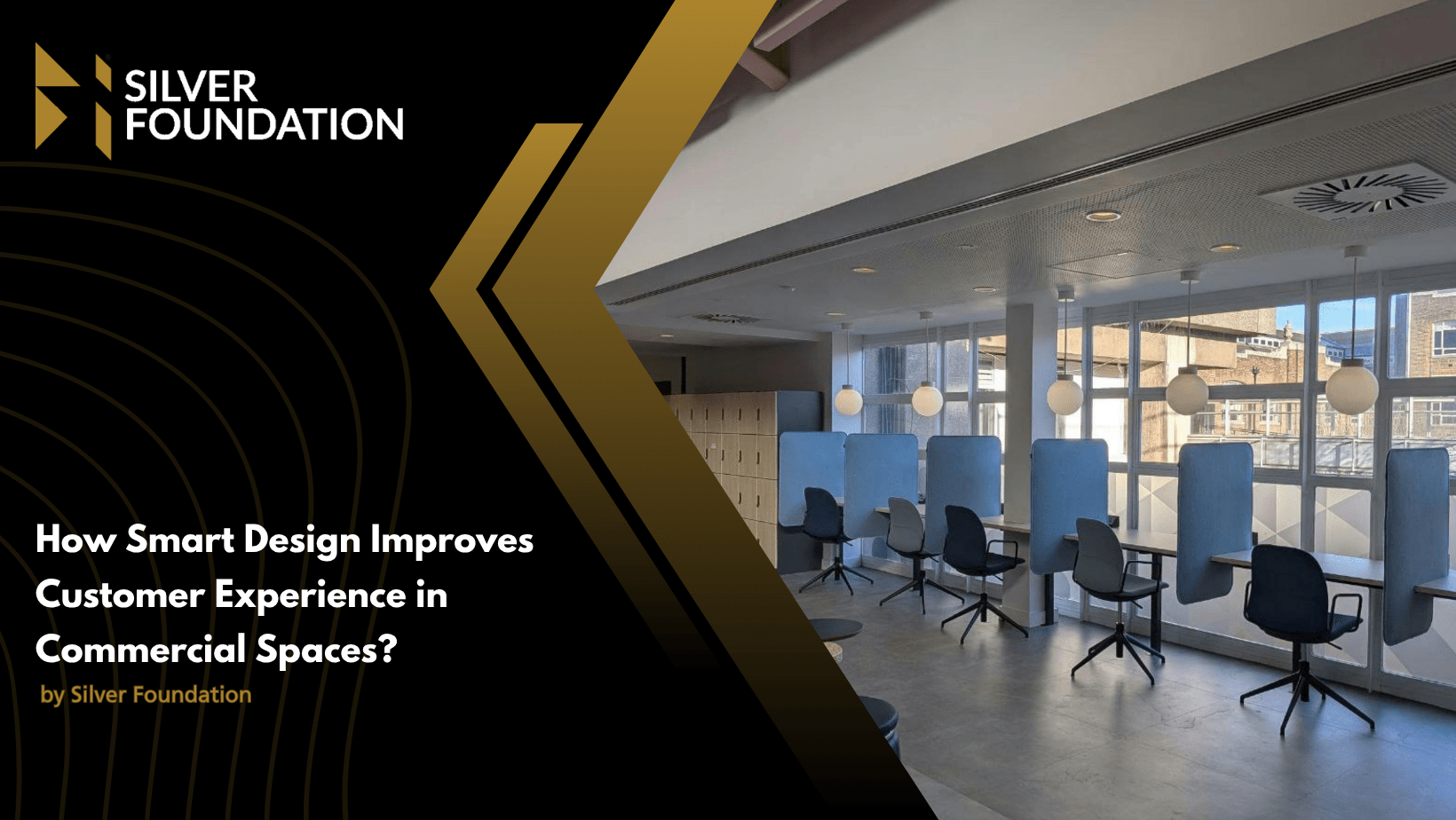
Smart design in commercial spaces shape customer decisions within seconds. Poor layouts, uncomfortable interiors, and confusing navigation can frustrate visitors and reduce engagement. Many businesses focus only on appearance while ignoring functionality and customer behavior. This often leads to lower sales, weak brand perception, and poor productivity. Silver Foundation believes smart commercial design should balance aesthetics, usability, technology, and branding to create smooth, engaging, and customer-friendly experiences that improve business performance.
Easy Navigation and Layout
Smart design facilitates customers’ movement around easily. Clear the pathways, use the proper signs, and have organized areas to minimize confusion. The ability for customers to be served and find their product, service, or seat at a moment’s notice without needing to waste time. In any commercial environment, a simple layout generates comfort and helps to save effort; the overall experience that visitors have is smoother and more enjoyable.
Comfortable Lighting and Ambience
Well-designed lighting can enhance customers’ moods and environment. Naturally, smart design utilizes a natural amount of light, soft colors, and a well-balanced illumination for establishing a pleasant environment. They could feel relaxed, stay longer, and enjoy their visit if the atmosphere is comfortable. This positive experience can lead to greater satisfaction and a boost in loyalty.
Better Space Utilization
Utilizing each element of a commercial space is very important. Furniture arrangement and neat interiors keep areas from getting cluttered and make it easier to maneuver. Spaces that are open and functional make customers feel more at ease. The tight fit of the space also enables companies to offer better services without having to sacrifice on cleanliness and appearance.
Integration of Modern Technology
Smart design for convenient application in modern commercial spaces. Time is saved and waiting lines reduced with digital screens, self-service kiosks, automated systems, and mobile payments. Consumers have quicker service and seamless experiences. Technology also aids businesses in conveying information accurately and delivering more customized service to visitors.
Excellent Sound Level and Comfort
Smart design incorporates sound control elements that lessen distractions and noise. A serene internal space is good for customer comfort, particularly in restaurants, offices, hotels, and health care areas. Appropriate acoustic design allows customers to relax, communicate easily, and focus well. Generally, a happier and better customer experience is created in comfortable surroundings.
Attractive Visual Appeal
When a business office is attractive, it establishes a good first impression. Colors, textures, furniture, and decorations are used in a harmonious blend in smart design. Chic interior aesthetics draw in business and create a memorable experience. There is a correlation between a good quality of service and the superior environment provided: first, they will feel attracted to the environment; it will help the businesses develop a relationship of trust with the customers, and consequently contribute to the long-term increase of customer loyalty.
Premium Safety and Accessibility
When it comes to safety and accessibility, smart design has no compromise when it comes to commercial spaces. Safety and convenience are enhanced as emergency exits, non-slip flooring, broad pathways, and ramps are provided. When customers’ needs are taken into consideration, they can feel more secure and comfortable. Accessibility also enables businesses to be more open to a more diverse customer base.
Psychological Impact of Smart Commercial Design on Customers
Smart design has a significant impact on customer sentiments and actions. Customers are comforted and relaxed by the cleanliness, organization, and appearance of their environment. The right lighting, color, and space design make for happy moods and reduce stress.
Customers are going to come back and enjoy their stay in a pleasant ambiance. The second is the benefit of smart design, as customers tend to associate professionalism, quality, and good design with well-designed spaces.
Satisfaction and repeat visits are enhanced with comfortable seating, noise control, and ease of navigation. Valued and comfortable customers will have a better emotional connection to the business. This can lead to higher levels of loyalty, positive reviews, and customer engagement.
Smart Design Trends Shaping Modern Commercial Spaces
Sustainable and Eco-Friendly Design
Increasing use of eco-friendly materials, energy-efficient lighting fixtures, and environmentally conscious construction techniques. Green smart design reduces the environmental impact and makes a healthier place for customers and employees to live and work. Consumers value a company that’s conscious of the environment. Commercial buildings that are green are also great for this reason – to enhance company image while reducing long-term energy and operational expenses.
Flexible and Multi-Use Spaces
In today’s office buildings, offices are utilized for several purposes. Furniture geometries and flexible arrangements enable the use and adaptation of space as needed. Commerce companies do not need to trouble themselves with the issue of area modification. They can rapidly transform rooms for conferences, meals, or shopping, or for collaborative activities. This practice will help increase the efficiency of space usage and make it easier for customers and employees.
Smart Technology Integration
Technology is playing a pivotal role in commercial design. Smart lighting, automated systems, digital displays, and touchless services enhance convenience and efficiency. Advancements in technology help customers have faster and smoother experiences. Ventilation control and energy saving are also improved in business environments, as is communication in company locations.
Wellness-Focused Interiors
Modern commercial premises now focus on customer health and comfort. Natural lighting, indoor plants, comfortable furniture, and fresh air systems give designers a choice of a relaxing environment. Colorful interiors help to lower stress and increase happiness. When designing environments for patients, people feel positive and comfortable when it is designed to support physical and mental health.
Personalized Customer Experiences
Spaces are being designed to enhance the customer experience in a distinctive and memorable way. The interior themes, interactive displays, and customized seating areas ensure that customers can experience a relationship with the brand. It enhances customer satisfaction and can lead to patronage. It results in better design and customer satisfaction, which generally leads to patronage. This also assists businesses to rise above the crowd of rivals in competitive markets.
Industries That Benefit Most from Smart Commercial Design
Smart design offers significant advantages to many industries, ranging from facilitating customer experience and enhancing comfort to boosting efficiency. The smart layout and the vitality of the interior of retail stores help to engage with customers and boost sales.
This results in a more pleasant environment and efficient layouts for restaurants and hotels, which enhances the guest experience. Smart design helps to promote calm, safe, and accessible healthcare environments for patients and visitors. Offices have flexible and productive workspaces that promote employee wellness.
Also, educational institutions make use of smart design to make a better expertise environment. In general, mindfulness in commercial design can foster enhanced experiences, streamline operations, and contribute to better business, customer, and visitor relations.
Conclusion
Summing up, poorly designed commercial spaces can reduce customer comfort, trust, and engagement. Smart design improves navigation, accessibility, comfort, brand image, and the overall customer experience. Silver Foundation encourages businesses to evaluate whether their commercial spaces truly support customer needs, employee productivity, and future growth.
Frequently Asked Questions
How does commercial design affect customer experience?
Commercial design influences customer comfort, navigation, mood, engagement, and purchasing decisions.
Why is customer experience important in commercial spaces?
A positive customer experience increases retention, trust, brand loyalty, and overall business profitability.
What are the key features of smart commercial spaces?
Key features include efficient layouts, strategic lighting, accessibility, technology integration, and flexible design.
How can smart design improve retail sales?
Better layouts, visual appeal, customer flow, and convenience encourage longer visits and increased purchases.