
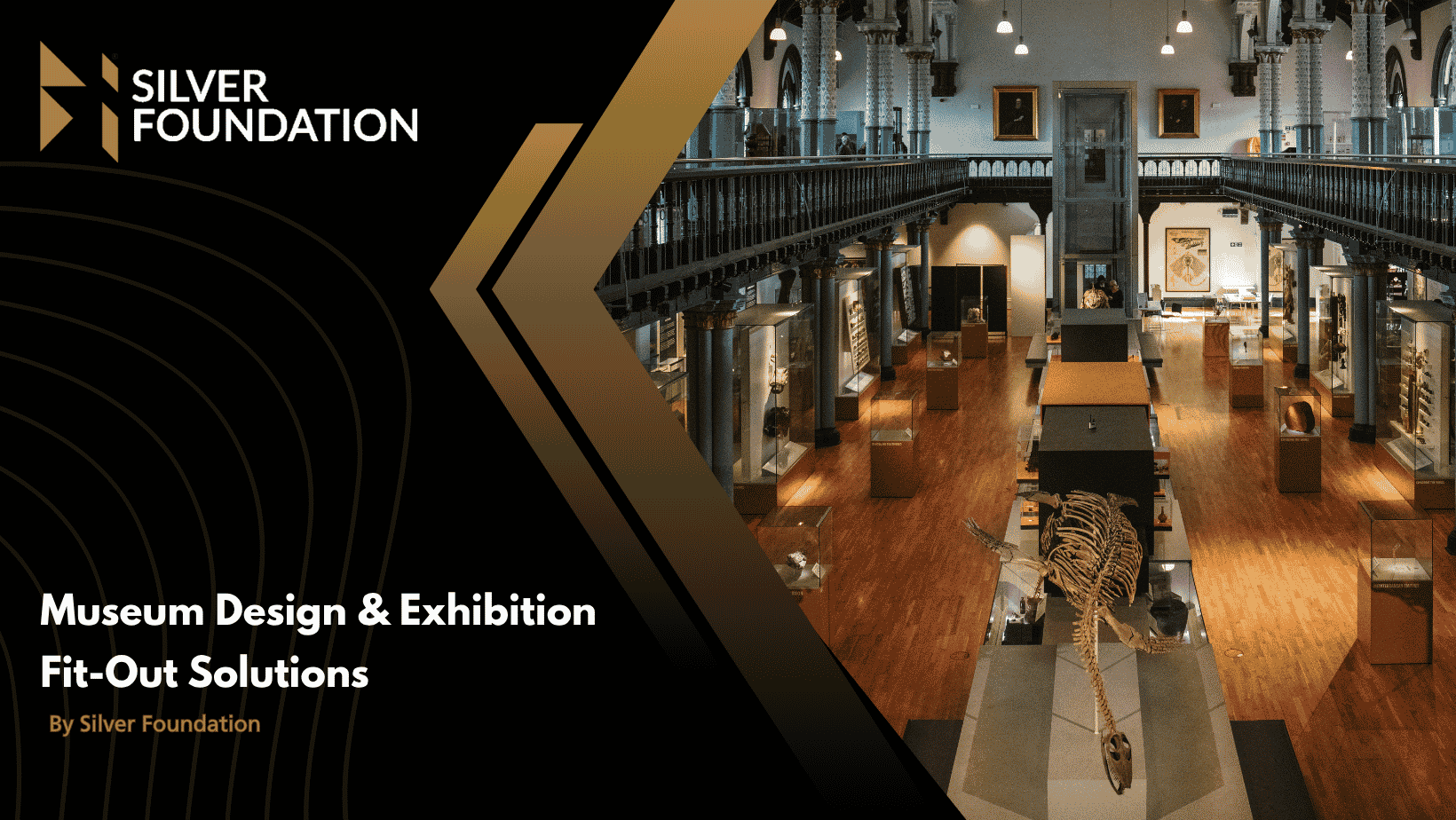
Museums preserve history, celebrate culture, and inspire future generations through thoughtfully designed spaces. Modern exhibition fit-out solutions transform ideas into immersive, interactive experiences that captivate visitors while protecting valuable collections. As demand grows for sustainable, technology-driven museums, expert planning and execution are essential. Silver Foundation delivers innovative museum design, exhibition fit-out, construction, and MEP solutions across Saudi Arabia, creating engaging cultural environments that leave lasting impressions.
Museum fit-out solutions are designed around the idea of engaging spaces that allow visitors to learn, explore, and communicate with history, art, science, or culture. These solutions include a range of creative planning, functional layouts, lighting, display systems, graphics, and technology presented in an attractive and meaningful way to show collections.
Each element has been meticulously engineered to promote the comfort of visitors and to prevent damage to valuable exhibits. A well-planned fit-out also facilitates the smooth flow of visitors, accessibility, and future changes to the museum. From a small local gallery to a large national museum, professional design solutions make ideas real and make them memorable – and keep visitors coming back for more.
Core Components of Museum Fit-Out Solutions
Space Planning and Layout
A good exhibition design company facilitates the flow of visitors through exhibitions without causing overcrowding. Good space planning allows for clear spaces, accessibility, and every display can be attended to. It also supports the functioning of the staff and facilitates future exhibition modifications without significant changes to the building.
Display Cases and Exhibition Furniture
Display cases and custom exhibition furniture serve to showcase valuable items as well as present them in an attractive manner. They are intended to reflect the theme of the museum, offer correct visibility, and meet a long lifespan requirement. The use of materials that can be used over the years and flexible designs increases the ability to display various sizes and types of collections.
Lighting and Visual Presentation
Exhibits are suitably lit, making them more accessible and appropriate for the atmosphere of the exhibit. Natural and artificial lighting can be used together to enrich the colors, textures, and details of an object, while preventing over-exposure to light sources that could be harmful. Good lighting also allows people to move around in the exhibition spaces without getting frustrated.
Interactive Technology Integration
Multimedia installations, touch panels, interactive screens, and digital displays are introduced in the exhibitions, making them more interactive. These technologies have the potential to enable people to connect with information and make the learning experience memorable and meaningful to them. Interactive elements also work well to engage kids, students, and tech-savvy museum-goers.
Types of Museums That Benefit from Fit-Out Services
Art Museums
The custom-built galleries, flexible lighting systems, and well-thought-out illumination in art museums serve paintings, sculptures, installations, and all artwork well. Commercial fit-out contractors design beautiful rooms for exhibitions which maximize interaction between people and art while safeguarding the art from environmental hazards and over-handling.
History Museums
History museums need to be orderly and present historical events, artifacts, and documents in an interesting manner. The fit-out solutions featured educational placemarks, immersive environments, and interactive storytelling elements, helping to create an understanding of the various eras and to help retain key historical collections.
Science Museums
Interactive exhibits, digital technology, and educational displays are used to foster hands-on learning in science museums. Fit-out services can make a flexible space that can be used for demos, experiments, and multimedia presentations. The designs make science fiction, making it easier to grasp what is occurring and keep the guests engaged throughout the visit.
Children’s Museums
Children’s museums require a safe, dynamic, engaging space that allows for exploration and creativity. Professional fit-out solutions include child-friendly furniture, areas for children to be active and develop their skills in play, displays that enable learning to be supported through play, while also being safe and accessible to the whole family.
Natural History Museums
The exhibits of natural history museums feature fossils, minerals, wildlife and environmental displays on specially-designed showcases and educational formats. Fit-out solutions offer robust exhibit systems, natural lighting and interactive learning opportunities to educate visitors about nature while keeping valuable specimens safe and secure.
Visitor-Centered Layout
In modern museum construction in Saudi Arabia, the design is centered on visitors and their desire to immerse themselves in the exhibits in a natural way, while providing a comfortable environment for them to enjoy. Placing widening paths, clear directions, and resting areas makes it easier and more enjoyable for all to visit the museum, especially for people of all ages.
Flexible Exhibition Spaces
Flexible galleries enable museums to change their shows with little effort. The flexibility of modular display systems, portable walls, and adaptive lighting helps to keep pace with changing collections and temporary exhibitions, as well as special events, reducing renovation costs and increasing usability in the long run.
Sustainable Design Practices
The newest trend in museum design is the use of energy-efficient lighting, eco-friendly materials, and green building techniques. These capabilities result in reduced operating costs, decreased impact on the environment, increased air quality and comfort of the visitors while meeting the standards for exhibit preservation and visitor comfort.
Digital Visitor Engagement
Interactive exhibits, AR, mobile guides, and multimedia presentations enhance the learning experiences and hold visitors’ attention. Digital tools will increase accessibility to information and will enable museums to tell a story via videos, animations and interactive learning materials.
Accessibility and Inclusivity
Accessible entrances, ramps, elevators, tactile displays, multilingual signage and exhibition planning make it accessible to everyone and enrich the museum experience. Modern designs take into account that there are visitors with various capacities and make the museum accessible, informative, and comfortable to a wide range of visitors.
Advanced Security Systems
Valuable collections are safeguarded by the use of surveillance-camera systems, smart alarms and controlled access systems, and secure display cases in modern museums. When considering exhibit security, the goal is to create a secure display that won’t displease visitors, which will be attainable through effective solutions that allow visitors to explore the exhibit comfortably without any disruption to the overall museum experience.
Latest Museum Design Trends in 2026
In 2026, more immersive, flexible, and visitor-centric museum designs emerge. Innovation, such as interactive digital displays, augmented reality, and artificial intelligence, is transforming how museums present information in new and personalized ways. The use of sustainable materials and the use of light that is as energy-efficient as possible and environmentally friendly continue to be key issues for new projects.
Designers are also developing flexible exhibition areas that are easily made ready for temporary displays and special events. Inclusive designs and layouts, multilingual materials, tactile displays, and electronic guides for visitors keep improving accessibility. Many museums are using multimedia stories along with physical objects to enhance the learning experience.
Tourist amenities, moments for contemplation and contemplative areas, and collaborative educational spaces are becoming increasingly prevalent. They have an aim of making museums more accessible to wide audiences, offering, at the same time, meaningful cultural and educational experiences to both adults and children.
Frequently Asked Questions
Why hire specialists for museum fit-out projects?
Specialists ensure accurate installation, preservation standards, engaging designs, and seamless integration of technology and exhibits.
How long does a museum fit-out project take?
Project duration depends on size and complexity, typically ranging from several weeks for small exhibits to several months for larger museums.
Why is lighting important in museums?
Proper lighting protects sensitive artifacts, improves visibility, enhances storytelling, creates atmosphere, and supports an engaging visitor experience without causing damage.
What are turnkey museum solutions?
Turnkey museum solutions manage design, engineering, fabrication, installation, testing, and project delivery through one coordinated team from start to completion.


