
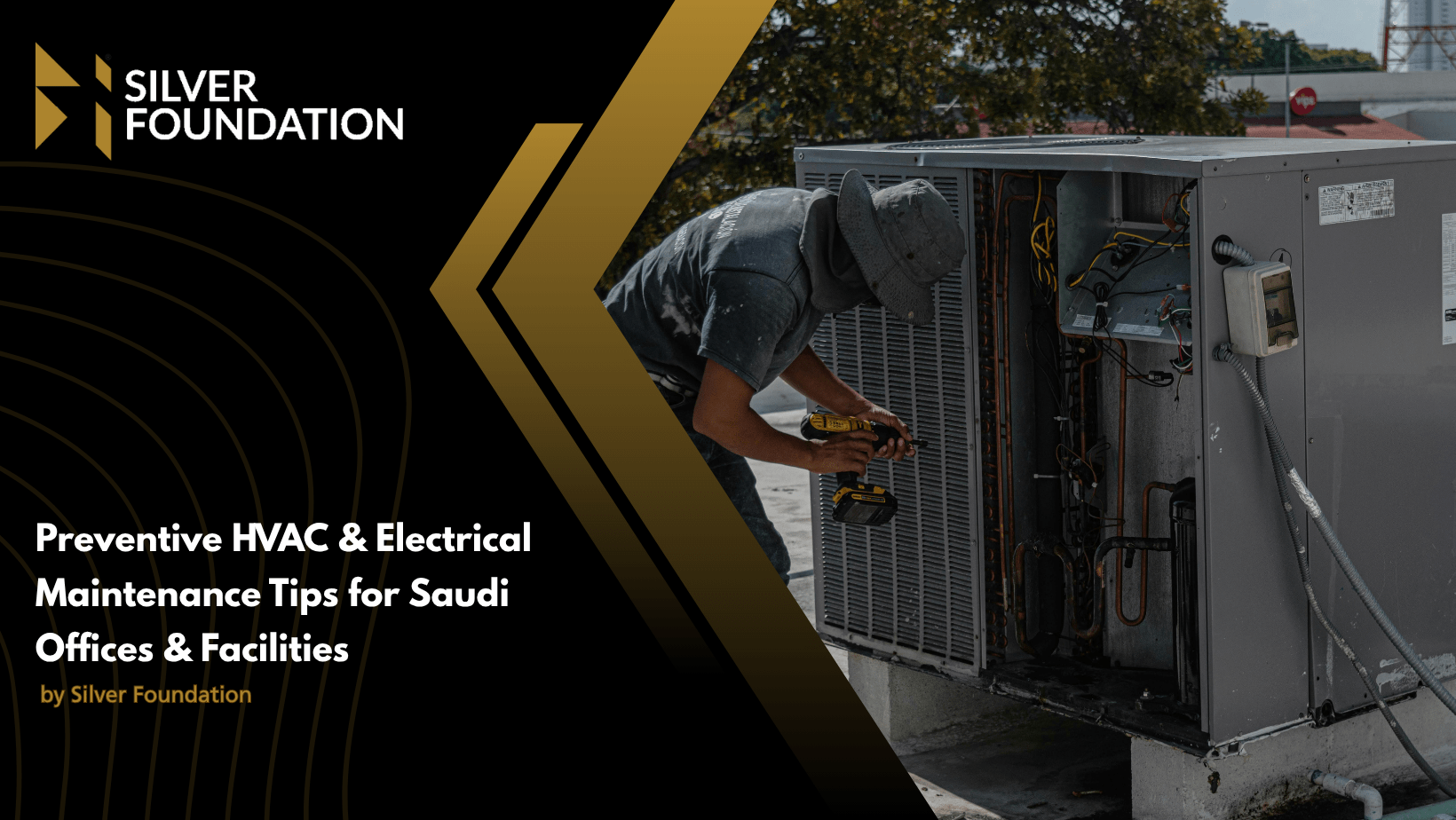
Facility maintenance plays a vital role in Saudi Arabia due to extreme weather conditions such as intense heat, frequent dust storms, and high humidity in coastal regions. These factors put continuous stress on HVAC and electrical systems in office buildings and commercial facilities. Without proper care, energy consumption increases, and equipment becomes inefficient or may fail unexpectedly. Preventive maintenance helps reduce costs, improve safety, and ensure smooth operations. Silver Foundation provides professional facility management support to help businesses maintain reliable, energy-efficient, and well-functioning environments.
Preventive maintenance is all about “care before problem” in facility management. It involves routine maintenance and repairs of HVAC systems, electrical and plumbing fixtures, and fittings. The primary objective is to prevent unexpected failures and expensive repairs. It also contributes to increased building safety, comfort, and energy efficiency.
Machines operate more efficiently and effectively when they are properly maintained. It also reduces shutdown time and increases the performance of those who work in the facility. Preventive maintenance is done on a scheduled basis, rather than in response to failure. This process not only saves costs but also allows for efficient daily office and building operations.
Smart HVAC & Electrical Maintenance Tips for Saudi Offices
Clean and Change the Filters Regularly
Cleaning and replacing the HVAC filters regularly to maintain good air quality. Dirty filters obstruct airflow and cause systems to work harder. This increases the use of electricity and reduces the cooling performance. Dust is a problem in offices in Saudi Arabia, so the filters are to be done more frequently. Clean filters also help to minimize any health problems among the building’s employees and enhance the comfort of the building.
Inspect Electrical Wiring and Connections
Check wiring periodically for shorting out or fire hazards. The system failure may be caused by loose or damaged wires. When the energy flows in the right direction, it is safe through proper inspection, and the energy is used to its best advantage in office equipment. Heat can have a negative effect on insulation, especially in hot climates such as Saudi Arabia. Regular checks prevent accidents and ensure the safe and smooth running of systems.
Optimize Thermostat Settings
Provide optimal temperatures for thermostats to conserve energy and enhance comfort. Low temperatures lead to extremely high electricity costs and stress HVAC systems. Maintain balance of settings based on office use and weather conditions. Efficient operation of smart thermostats keeps the indoor temperature stable. This will help lower system load and help the cooling equipment last longer.
Conduct Regular System Inspections
Plan regular inspections for HVAC and electrical systems. If small problems are spotted early, then large problems will be avoided. Technicians can detect worn components, leaks, or defective parts. Regular servicing helps maintain the reliability of the system and reduce the expenses of emergency repairs. In an office environment, scheduled inspections keep things up and running and contribute to a more comfortable work environment.
Maintain Outdoor Units Free of Clutter
Keep outdoor HVAC systems clear of dust, debris, and obstructions. Dirt buildup clogs the airways and the performance of the system. Sand and dust can quickly cause a reduction in performance in Saudi Arabia. Cleaning regularly ensures better cooling capability and no overheating. Good conditions also prolong the life of the equipment and save money over time on maintenance.
Monitor Energy Consumption
Monitor the electric consumption and look for any irregularities. If energy consumption is high, it may mean that there is a problem with the system or that the settings are not optimal. Monitoring ensures that faults are identified at an early stage and performance is enhanced. It also helps in controlling the cost of an office building. Energy-efficient systems help to reduce the environmental footprint and save businesses money on their energy bills.
Proper Training of Personnel
Train office personnel in HVAC and Electric System Usage. Turning off unused devices conserves energy; simple habits do this. If used correctly, it will not overload the system and will help to minimize wear and tear. Training also assists staff in raising concerns in a timely fashion. This enhances the maintenance response and maintains systems efficiently and safely.
Common Signs Your HVAC System Needs Maintenance
Weak or Uneven Airflow
Airflow can be blocked, or system components may be malfunctioning if some rooms are cooler than others or warmer than others. If there is insufficient air movement, then it is likely that the filters are dirty or there is a problem with the ductwork. This decreases the comfort and increases the amount of effort that the system must put in. Proper airflow and cooling can be recovered within a short period of time with early maintenance.
Unusual Noises from the System
Mechanical noises such as banging, rattling, or buzzing are strange sounds. The sounds can be due to loose parts or to the motors. Unless they are ignored, the damages may be increased. Regular inspection can help to detect and correct issues at an early stage. If it is quiet, it is most probably operating correctly and efficiently.
Higher Electricity Bills
An unexpected surge in heating and cooling costs could be a sign of HVAC inefficiency. Dirt, leaks, or problems with the parts could be causing the system to work harder than it needs to. This impacts quality and leads to higher costs. Maintenance brings back efficiency and controls costs. Regular bill reviews may help identify undetected problems with the system.
Bad Odors or Poor Air Quality
If it smells bad or the air is dusty, it may indicate that the filters are clogged, there is dirt, or mold. Air quality in the office has a negative impact on health and comfort. It can also be a sign of drainage or system problems within the body. Maintains a healthier working environment and improves air freshness by cleaning and servicing the HVAC system.
Frequency of Preventive HVAC & Electrical Maintenance
Regular preventive maintenance of the HVAC and Electrical systems should be carried out to ensure smooth functioning. Filters, airflow, and visible wiring problems can be checked monthly. Quarterly inspections aid in the diagnosis of more serious issues with the system and make it more efficient. Major services should be performed at least twice a year, particularly in preparation for the summer and winter months.
Frequent checks might be required in Saudi offices where the HVAC systems operate heavily as a result of high temperatures. Electrical systems should also be regularly checked for safety. Regular maintenance, which follows the pre-formulated maintenance program, minimizes equipment breakdowns, conserves energy, maximizes equipment life, and maintains a comfortable indoor environment.
Conclusion
We recap preventive HVAC and electrical maintenance in Saudi Arabia, focusing on cost savings, safety, and efficiency. Adapting to harsh climate conditions is essential for reliability. Partnering with professional facility management providers like Silver Foundation ensures long-term performance and operational stability for businesses overall.
Frequently Asked Questions
Why is electrical maintenance important for commercial buildings?
It prevents fire hazards, ensures stable power supply, and reduces downtime caused by system failures.
Can preventive maintenance reduce energy bills?
Yes, well-maintained systems operate more efficiently and consume less electricity.
What are common signs of electrical system issues?
Frequent tripping, overheating panels, flickering lights, and unusual burning smells are common signs of system failure.


