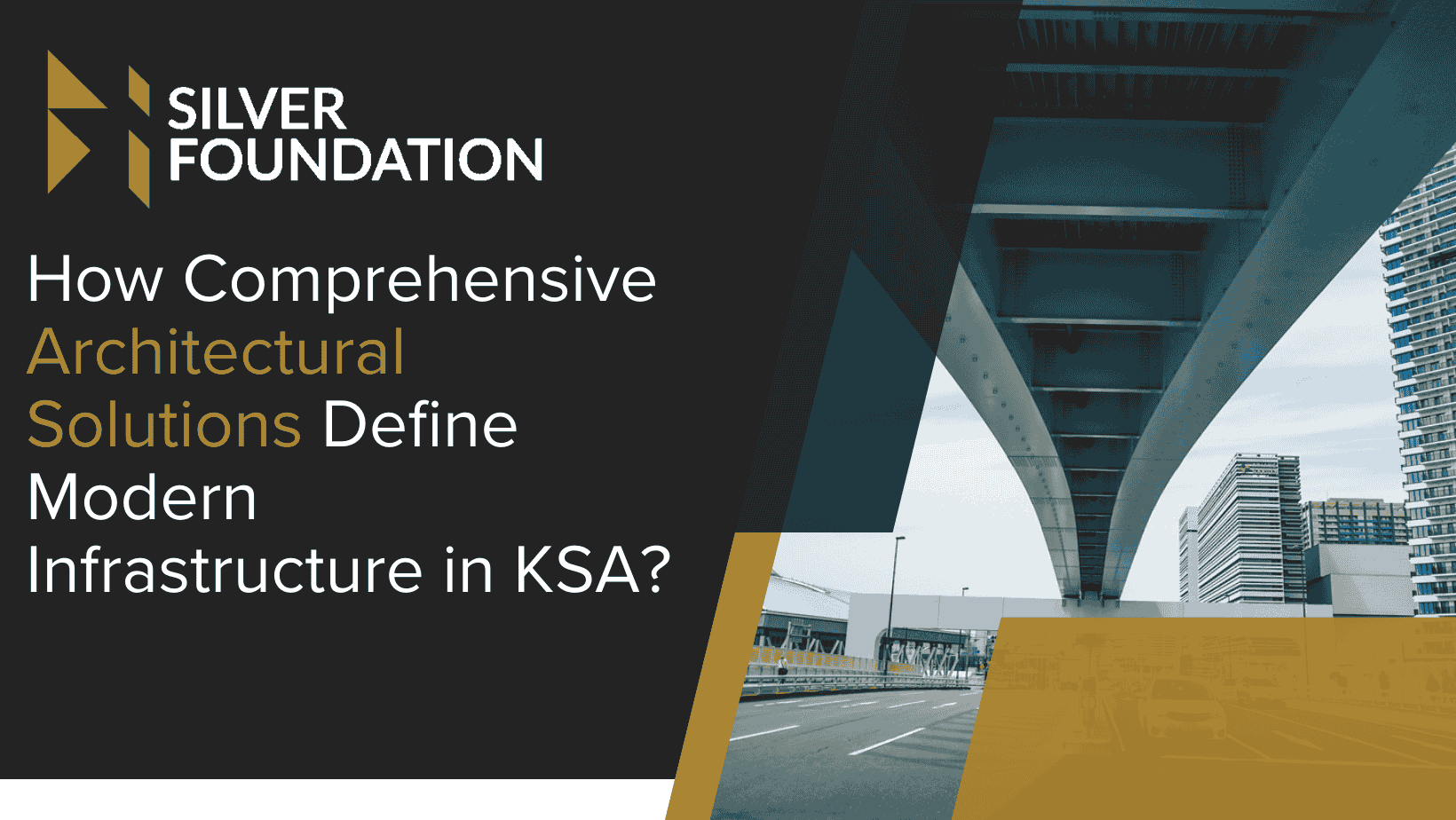
Saudi Arabia is witnessing unprecedented growth in infrastructure, transforming cities with modern roads, skyscrapers, and smart urban developments. In this dynamic environment, architectural solutions play a vital role in shaping urban spaces that are functional, attractive, and sustainable. Modern infrastructure requires more than just construction; it demands a careful balance of design, technology, and environmental responsibility to meet the needs of growing populations. At Silver Foundation, we are committed to delivering innovative solutions that support this vision, helping cities evolve while maintaining harmony between aesthetics, functionality, and sustainability.
The infrastructure of Saudi Arabia is undergoing fast changes. It is following the standards of Vision 2030, which seek to diversify the economy and improve the quality of life. The kingdom is close to modern urban development, which is based on large-scale projects such as NEOM City, Riyadh Metro, and the Red Sea Project. Urban planning is fundamental in creating efficient and linked urban centres. Sustainable architecture is relevant in making urban centres environmentally responsible.
The infrastructure, such as roads, airports and local transport, is being enhanced to international standards that facilitate domestic investment and foreign investment. These steps are in line with strategic growth, whereby innovation and tradition are balanced. It is based on building resilient and world-class infrastructure that helps to promote economic development and improve the daily life of citizens.
Role of Comprehensive Architectural Solutions
Design, engineering, and sustainability solutions in architecture play a significant role in forming functional and attractive spaces. They offer a comprehensive plan of residential, commercial and industrial developments where all aspects are taken into consideration till the end. The combination of creative design with building integrity and sustainability offers safe, efficient, and versatile spaces.
They also keep in mind culture and community needs by offering buildings that improve the quality of life. Overall architectural planning will enable us to minimize the operation costs, enhance energy efficiency, and adhere to the regulations. Such solutions play an essential role in Saudi Arabia in aiding the massive growth and transformation that is expected and aimed at in Vision 2030.
Understanding Key Components of Architectural Solutions
Design Excellence
Design excellence focuses on designing buildings that are aesthetically attractive, practical, as well as culturally significant. It brings elements of traditional Saudi design and modern features that will guarantee that the spaces will remind one of the local identity. Thus, the interior will be up to date and meet modern demands. This strategy improves the experience of the users, fosters pride in the culture, and enhances the visuality of the cities throughout Saudi Arabia.
Sustainability and Eco-Friendly Practices
The KSA approach to sustainable design is based on energy performance, integration of renewable energy and green space. Solar power, efficient materials and water-saving systems are used in buildings to minimize the impact on the environment. Environmental sustainability practices reduce carbon footprint and foster sustainable management of resources and healthier and resilient cities.
Technology Integration
The implementation of technology in architecture improves connectivity, performance, and safety. Smart buildings take advantage of the IoT systems, automated controls, and Building Information Modeling (BIM) to streamline operations. Such a solution provides real-time control, predictive maintenance, and smooth communication. This makes the infrastructure in Saudi Arabia of the modern era smart, responsive, and both forward-thinking and forward-moving.
Regulatory Compliance
The architectural solutions should comply with the local building codes, safety standards and zoning regulations. Compliance has provided legal approval, structural safety, and international best practices. By satisfying these requirements, sustainable urban development is enhanced. This also preserves the reputation of the grandiose infrastructure initiatives in Saudi Arabia.
Popular Iconic Projects Showcasing KSA Modern Infrastructure
King Abdullah Financial District (KAFD) – Riyadh
The King Abdullah Financial District is a spotlight of economic reform in Saudi Arabia. This project is providing the state with the newest skyscrapers, a smart city structure, and an environmentally friendly design. It incorporates modern transportation networks, walking streets, and state-of-the-art office buildings. Thus, it presents the vision of the kingdom to be a global financial centre and encourages innovation and a modern city lifestyle.
Riyadh Metro – Transforming Urban Mobility
Riyadh Metro is among the biggest urban transport initiatives in the world. It transforms the transportation sector in this city with six metro lines that span more than 176 kilometres. The project focuses on efficacy, environmental sustainability, and connectivity and reduces traffic jams and encourages the use of public transportation. It is a representation of Saudi Arabia to develop smart cities and contemporary urbanism.
King Fahd International Airport – Gateway to the Kingdom
The Fahd international airport in Dammam is a contemporary aviation miracle, which incorporates both beauty and technology in its architectural design. It is equipped with massive passenger amenities, state security and transport systems. This project symbolizes investment in global connectivity by Saudi Arabia. The airport is promoting international tourism, trade and regional development and the modern infrastructure of the kingdom.
NEOM – The Futuristic City
NEOM is an innovative smart city project that is set to include AI, robotics, renewable energy, and sustainable city planning. This mega project is worth 500 billion. It is expected to transform the standards of living in the future through futuristic transportation, green infrastructure, and state-of-the-art industries. NEOM is the perfect example of Saudi Arabian innovation, sustainability, and global urban development.
King Salman Park – Green Urban Landmark
King Salman Park is a large urban green area in Riyadh (13.4 square kilometres), which includes recreational areas, cultural centres and modern landscapes. It integrates sustainability and recreation and enhances the well-being of the people and sensitivity to the environment. The project is iconic and shows the commitment of Saudi Arabia towards the development of modern infrastructure. It helps to balance urban development and environmental conservation perfectly.
Common Challenges and Future Outlook Beyond 2025
The infrastructure sector is subject to several challenges, such as climate risks, increased expenses, sustainability, and a lack of skilled workforce expertise. It would take creative thinking and dynamic planning to deal with such problems. In the future, the trends that include the application of artificial intelligence in design, 3D printing, and sustainable materials will change the way projects are designed and offered.
These technologies offer quicker construction, lower cost and less to the environment. Public-private partnerships will be meaningful in catalyzing the development of infrastructure. Both sectors will combine resources, expertise and innovation. These trends will enable the industry to resist the existing challenges and have a resilient and sustainable infrastructure in the future.
Conclusion
Summing up, modern architectural solutions are shaping Saudi Arabia’s infrastructure. They are focusing on sustainability, technology, and cultural values to create cities that thrive. By integrating thoughtful design with modern innovation, these developments set a benchmark for the region. Silver Foundation continues to support this transformation, delivering projects that reflect both the nation’s rapid growth and its commitment to building a sustainable, livable future.
Frequently Asked Questions
How do architectural solutions impact infrastructure development in KSA?
They enhance efficiency, sustainability, aesthetics, and functionality in all types of urban projects.
What is the role of technology in modern Saudi architecture?
Technology enables smart buildings, energy management, and data-driven infrastructure planning efficiently.
How do sustainable practices influence Saudi infrastructure?
They reduce environmental impact, lower energy costs, and promote eco-friendly urban development.
Which key projects demonstrate modern infrastructure in KSA?
NEOM City, Riyadh Metro, and Red Sea Development exemplify advanced infrastructure planning.