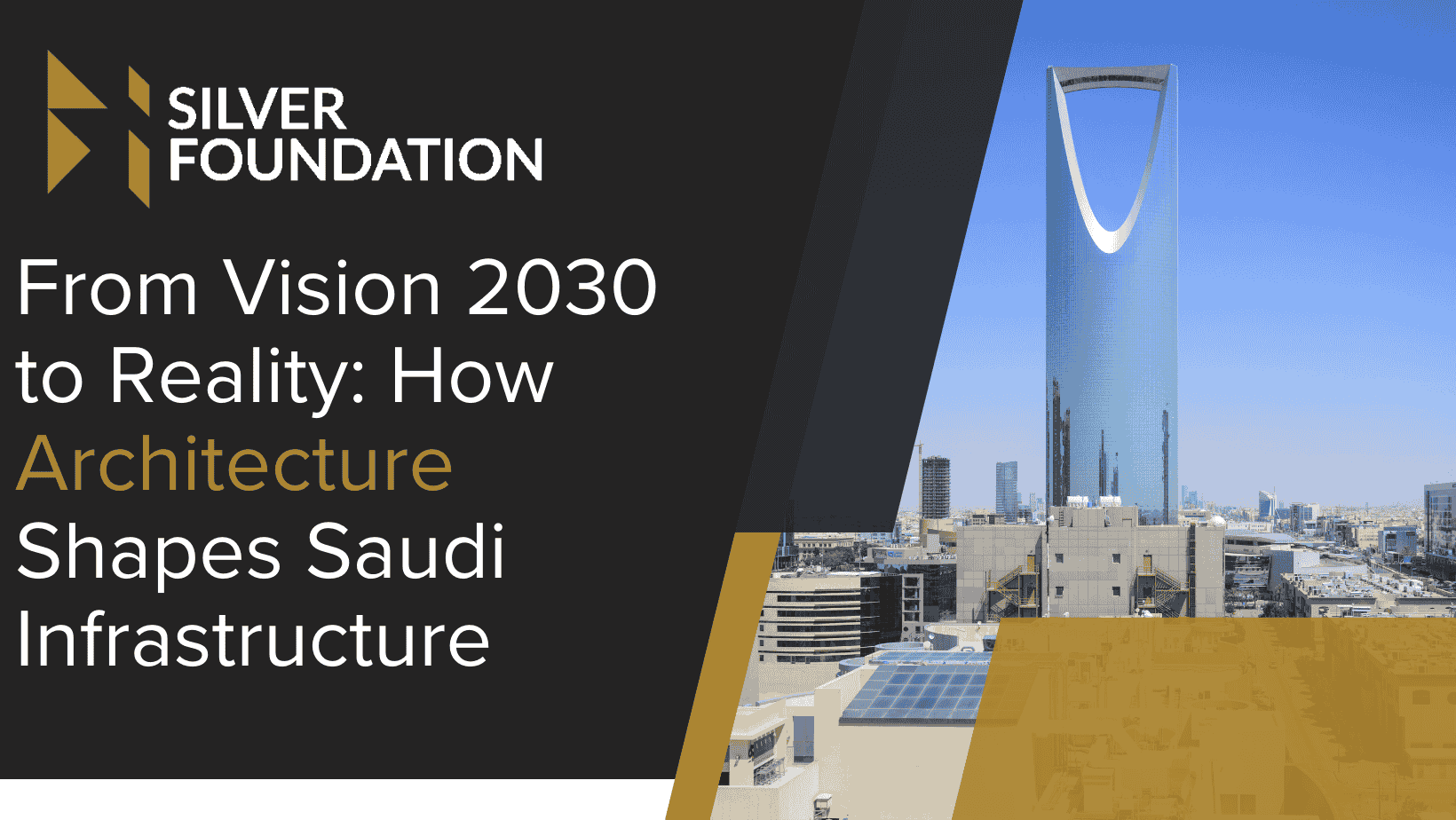
Saudi Arabia is experiencing a remarkable transformation under Vision 2030. Architecture plays a key role in this journey, shaping cities, public spaces, and transportation systems while promoting sustainability and cultural identity. From innovative smart cities to sustainable housing projects, the built environment is driving functional, social, and economic growth. Silver Foundation is contributing to this vision, contributing modern design with Arabian heritage. Their main goal is to support Saudi Arabia’s ambitions for a thriving, diversified, and forward-looking future.
Vision 2030 provides Saudi Arabia with the right direction for reducing oil dependence and building a more diversified economy. The plan focuses on the development of areas such as tourism, technology, and entertainment and improving the living standards of the people. It puts architecture as an essential tool in the development of modern cities, innovation, and cultural heritage. With proper planning and development, Vision 2030 hopes to make the country a great place to do business and a tourist destination in the world.
Vision 2030 focuses on building modern infrastructure that can facilitate economic and social development. This involves the development of smart cities, the development of urban centres, and the efficiency and accessibility of the transportation system. The plan also promotes sustainable and eco-friendly construction methods. This guarantees long-term benefits to the communities. With an emphasis on sustainable and progressive infrastructure, Saudi Arabia aims to develop functional, attractive, safe, and interconnected cities. This will, in turn, sustain other objectives of economic diversification and modernisation.
Focusing on Modern Architectural Trends in Saudi Arabia
Integration of Technology and Innovation
Saudi Arabia is slowly depending on modern technology in architecture. Building management systems and AI are used to ensure energy efficiency and security of buildings. Planning in urban areas is also supported by digital tools, and this renders cities more functional and well-organised. They can be smart city projects and energy-saving buildings that are convenient and sustainable at the same time.
Sustainable and Eco-Friendly Designs
Sustainability is an essential aspect of Saudi architecture in the present times. Homes are constructed with environmentally friendly materials, energy-efficient systems, as well as water conservatory technologies. Solar energy is also used extensively to reduce pollution. These designs not only safeguard the environment but also save long-term expenses. The modern constructions reflect a strong dedication to green and responsible architecture.
Cultural Influence in Modern Architecture
The modern designs used by Saudi architects are combined with the traditional Islamic and Arabian designs. In this way, cultural heritage is maintained, but the contemporary trends are accepted. Local art and design are commonly expressed in the form of public spaces, transport hubs, and commercial buildings. One of them is the Riyadh Metro, where cultural elements are reflected in the design of the stations. All of them are equipped with high functionality.
Role of Sustainability and Green Architectural Concept
Green architecture and sustainability aim at reducing the environmental impact and enhancing life. Green buildings apply recycled building materials. They are choosing to have low-carbon materials and focus on long-term, energy-efficient structures that conserve resources and save money. Renewable energy is incorporated in using solar panels, wind turbines, energy-saving streetlights and smart grids. This will help cities and homes to utilize power in a more sustainable way.
There is also the management of water and resources with advanced recycling systems and green landscaping. They are using drought-resistant plants to save on water and help the urban environment be healthier. To the Saudi infrastructure, such practices reduce the amount of environmental footprint. This also improves population health and makes the places more inhabitable. They.
List of Common Architectural Challenges and Solutions
Climate and Environmental Challenges
Hot weather, deserts, and regular sandstorms lead to adverse living conditions. The houses may become hot, the materials may rot, and the outdoor areas may become intolerable. Architects are challenged with the issue of ensuring that structures are livable and durable. Technological interventions, including the use of heat-resistant materials, reflective surfaces, and modern cooling, are used to provide comfort and safeguard buildings against unfriendly conditions.
Balancing Tradition and Modernity
Cities should be able to celebrate cultural heritage and, at the same time, adapt new and futuristic designs. Unless the city is keenly incorporated, modern buildings may destroy historical identity. Architects are mixing conventional patterns, materials and local motifs in contemporary forms. In this way, the cultural memory is maintained, and active and aesthetically pleasing buildings are designed and constructed in the present and in the future.
Urban Population Growth
The growing urbanization raises the demand for housing, transport and services. Cities are overfilled, have insufficient resources and overstretched infrastructure. The planners and architects react by constructing vertical housing, mixed-use, and intelligent urban designs. Effective land use, transport planning, and sustainable infrastructure can be used to accommodate the ever-increasing populations in cities without making them nonfunctional.
Outlook Beyond 2025: From Vision 2030 to Reality
The architectural transformation currently being undertaken in Saudi Arabia is set to go far beyond 2030. They are planning to embrace the future in which innovation, sustainability, and cultural heritage will be together. The Kingdom is planning to develop smart cities and environmentally friendly infrastructure that can both serve the demands of the modern world and the rich history of the country. Innovation, tourism, and design excellence. Landmark projects and sustainable urban planning can make Saudi Arabia a global centre of innovation, tourism, and design excellence.
Architecture will continue to be a leading force in the creation of resilient, efficient and iconic buildings. Modern technology will be combined with traditional aesthetics. The built environment in Saudi Arabia will be an inspiration to the region and to the world by the balanced approach of ensuring functionality, sustainability and cultural identity.
Conclusion
Summing up, architecture is at the heart of Saudi Arabia’s Vision 2030, shaping sustainable cities and smart infrastructure. Silver Foundation is driving urban transformation and economic growth. With a focus on sustainable design, technology, and cultural preservation, architecture continues to shape a modern, thriving, and diversified future for the kingdom.
Frequently Asked Questions
How does Vision 2030 influence Saudi architecture?
Vision 2030 guides modern design, sustainable development, and infrastructure modernization across Saudi Arabia.
What are NEOM’s key architectural features?
NEOM combines futuristic design, smart technology, renewable energy, and eco-friendly urban planning.
Why is sustainability important in Saudi infrastructure?
Sustainability reduces environmental impact, energy costs, and supports long-term urban livability in Saudi Arabia.
How are cultural elements integrated into modern architecture?
Traditional Islamic motifs, Arabian design, and heritage preservation influence contemporary Saudi buildings.